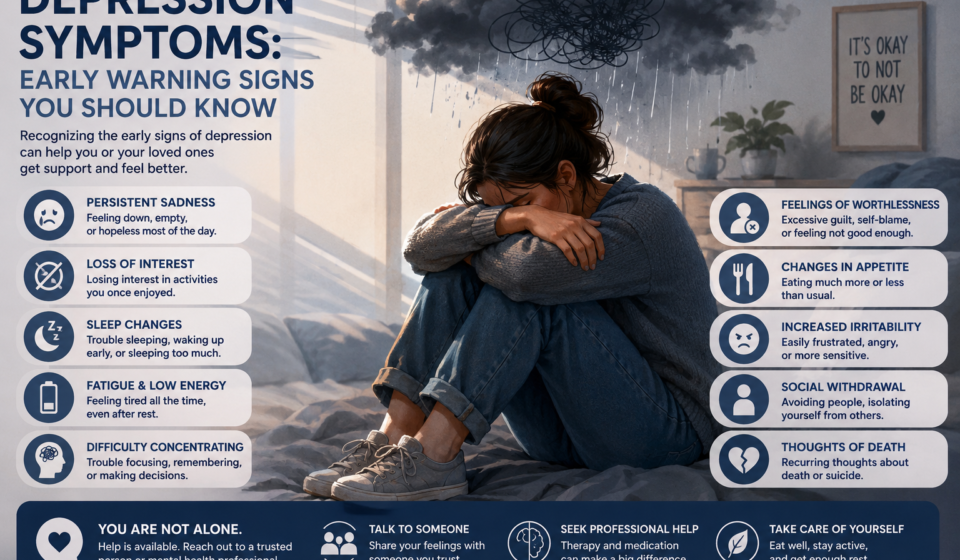

Depression Symptoms: Early Warning Signs You Should Know – Depression is one of the most common mental health conditions in the world, yet many people struggle to recognize its early signs. While everyone experiences sadness, stress, or disappointment from time to time, depression is different. It involves persistent emotional, physical, and cognitive symptoms that can interfere with daily life, relationships, work, and overall well-being. According to the World Health Organization (WHO), depression affects hundreds of millions of people globally and is a leading cause of disability worldwide.
Recognizing the early warning signs of depression can make a significant difference. Early intervention often leads to better outcomes and can help prevent symptoms from becoming more severe. In this article, we’ll explore the most common depression symptoms, how they differ from normal sadness, and when it’s time to seek professional help.
What Is Depression Symptoms?
Depression, also known as depressive disorder, is a mental health condition characterized by a persistent low mood, loss of interest in activities, and a range of emotional and physical symptoms. Unlike temporary feelings of sadness, depression typically lasts for at least two weeks and affects multiple aspects of a person’s life.
Depression can affect people of all ages, backgrounds, and lifestyles. It may develop gradually or appear after stressful life events such as loss, trauma, relationship difficulties, financial problems, or major life changes. Biological, psychological, and environmental factors can all contribute to its development.
Early Warning Signs of Depression Symptoms
1. Persistent Sadness or Low Mood
One of the most recognizable symptoms of depression is feeling sad, empty, or hopeless for an extended period. Unlike normal sadness, which tends to improve over time, depressive feelings often linger and may seem impossible to shake.
People experiencing depression may describe feeling:
- Constantly down or unhappy
- Emotionally numb
- Empty inside
- Hopeless about the future
These feelings often occur most of the day, nearly every day.
2. Loss of Interest in Activities
A major warning sign of depression is losing interest in activities that once brought joy. Mental health professionals refer to this symptom as anhedonia.
You may notice:
- Hobbies no longer seem enjoyable
- Social activities feel like a burden
- Favorite movies, games, or sports lose their appeal
- Motivation to pursue goals decreases
This loss of pleasure is one of the hallmark symptoms of depressive disorders.
3. Changes in Sleep Patterns
Sleep disturbances are extremely common among people with depression.
Some individuals experience:
- Difficulty falling asleep
- Frequent waking during the night
- Early morning awakening
- Restless sleep
Others may sleep excessively yet still feel exhausted throughout the day. Sleep problems can sometimes appear before emotional symptoms become obvious.
4. Persistent Fatigue and Low Energy
Feeling tired after a busy day is normal. Depression-related fatigue is different because it persists even after adequate rest.
People often report:
- Constant exhaustion
- Difficulty getting out of bed
- Reduced physical energy
- Feeling mentally drained
Even simple daily tasks can begin to feel overwhelming. Many individuals describe feeling as though they are carrying a heavy weight throughout the day.
5. Difficulty Concentrating
Depression doesn’t only affect emotions—it can also impact cognitive function.
Common concentration problems include:
- Difficulty focusing on tasks
- Forgetfulness
- Trouble making decisions
- Reduced productivity
- Mental fog
Many people are surprised to learn that cognitive symptoms can be among the earliest indicators of depression. Community discussions frequently highlight memory issues and “brain fog” as overlooked signs.
6. Feelings of Worthlessness or Excessive Guilt
Depression often affects the way people view themselves.
Warning signs may include:
- Harsh self-criticism
- Constant self-blame
- Feeling like a burden
- Believing you are not good enough
- Excessive guilt over minor mistakes
These negative thought patterns can become deeply ingrained and may worsen if left unaddressed.
7. Changes in Appetite and Weight
Depression can affect eating habits in different ways.
Some individuals experience:
- Loss of appetite
- Unintentional weight loss
- Reduced interest in food
Others may find themselves:
- Eating more frequently
- Craving comfort foods
- Experiencing weight gain
Significant changes in appetite or body weight can be important indicators of underlying depression.
8. Increased Irritability
While sadness is commonly associated with depression, irritability is another important symptom that is often overlooked.
People may become:
- Easily frustrated
- Short-tempered
- More sensitive to criticism
- Less patient with family and friends
In some cases, irritability may be more noticeable than sadness, particularly in teenagers and young adults.
9. Social Withdrawal
Depression frequently causes people to pull away from others.
You might notice:
- Avoiding social gatherings
- Ignoring messages or phone calls
- Spending more time alone
- Losing interest in relationships
Although isolation may temporarily feel easier, it often contributes to worsening symptoms over time.
10. Thoughts of Death or Suicide
One of the most serious symptoms of depression involves recurring thoughts about death, self-harm, or suicide.
Warning signs may include:
- Feeling that life is not worth living
- Thinking others would be better off without you
- Making plans related to self-harm
- Talking about wanting to disappear
These symptoms should always be taken seriously and require immediate professional support. Depression is a major risk factor for suicide, but effective treatment is available.
Depression vs. Normal Sadness
Many people wonder how to distinguish depression from ordinary sadness.
Normal sadness is usually:
- Triggered by a specific event
- Temporary
- Manageable
- Balanced with positive emotions
Depression, on the other hand:
- Persists for weeks or months
- Affects daily functioning
- Impacts sleep, appetite, and energy
- Reduces interest in life
- Creates ongoing feelings of hopelessness
The duration and impact of symptoms are key differences. Depression extends beyond normal emotional ups and downs.
Risk Factors for Depression
Several factors can increase the likelihood of developing depression, including:
- Family history of depression
- Chronic stress
- Traumatic experiences
- Major life changes
- Physical health conditions
- Substance misuse
- Social isolation
Experiencing one or more of these risk factors does not guarantee depression, but awareness can help individuals recognize potential warning signs earlier.
When to Seek Help
If symptoms persist for more than two weeks, interfere with daily life, or cause significant distress, it is important to seek professional support.
A healthcare provider or mental health professional can:
- Assess symptoms
- Provide an accurate diagnosis
- Recommend treatment options
- Offer therapy or medication when appropriate
The earlier treatment begins, the better the chances of recovery. Effective treatments for depression include psychotherapy, cognitive behavioral therapy (CBT), lifestyle interventions, and medication when needed.
Final Thoughts Depression Symptoms
Depression is a serious but treatable mental health condition. Early warning signs often appear gradually and may be mistaken for stress, burnout, or temporary sadness. Persistent low mood, loss of interest, sleep disturbances, fatigue, concentration problems, and feelings of hopelessness are all symptoms that deserve attention.
Recognizing these signs early can help individuals access support before symptoms become overwhelming. If you or someone you know is experiencing depression symptoms, reaching out for professional help is a courageous and important step toward recovery. With the right support and treatment, many people successfully manage depression and regain a fulfilling, meaningful life.