
Emotional Exhaustion Signs You Need Time to Recover – In today’s fast-paced world, many people push themselves to keep going even when their minds and bodies are signaling that something is wrong. Long work hours, family responsibilities, financial pressures, constant connectivity, and ongoing stress can gradually drain emotional energy. Over time, this depletion can lead to emotional exhaustion—a state of mental and emotional fatigue that affects nearly every aspect of life.
Unlike ordinary tiredness, emotional exhaustion does not disappear after a good night’s sleep or a relaxing weekend. It often develops gradually and can leave people feeling overwhelmed, disconnected, and unable to cope with everyday challenges. If left unaddressed, emotional exhaustion can contribute to burnout, anxiety, depression, and other mental health concerns.
Recognizing the signs of emotional exhaustion is essential because recovery becomes more difficult when symptoms are ignored for extended periods. Understanding what emotional exhaustion looks like can help you take action before it significantly impacts your health and well-being.
What Is Emotional Exhaustion?
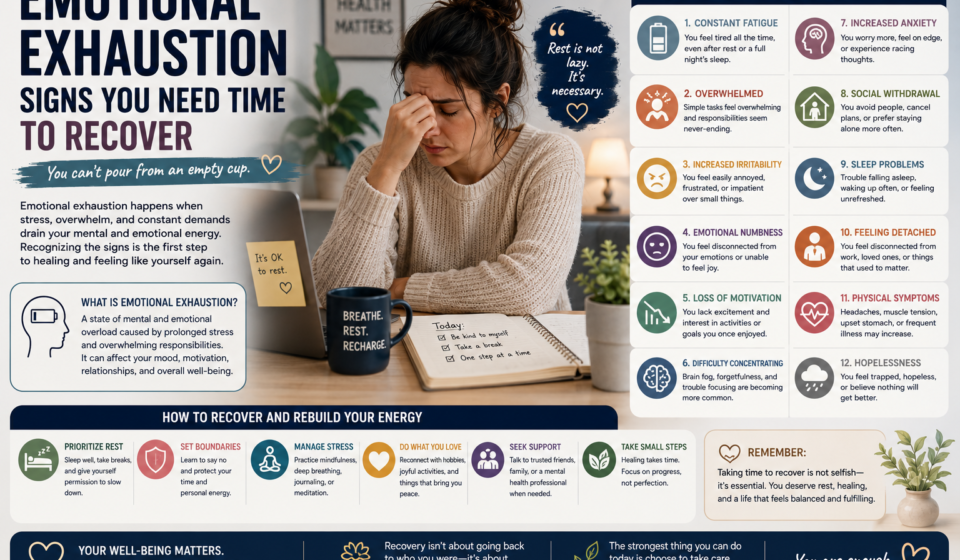
Emotional exhaustion is a state of psychological fatigue caused by prolonged stress, emotional strain, or overwhelming demands. It occurs when your emotional resources become depleted, making it difficult to manage responsibilities, relationships, and daily life effectively.
People experiencing emotional exhaustion often describe feeling emotionally drained, mentally exhausted, and unable to give more of themselves to others.
While emotional exhaustion is commonly associated with workplace burnout, it can affect anyone, including:
- Parents and caregivers
- Students
- Healthcare workers
- Business owners
- Remote workers
- Individuals experiencing major life changes
- People coping with chronic stress
Emotional exhaustion is not a sign of weakness. It is often a natural response to prolonged periods of emotional and mental overload.
Why Emotional Exhaustion Happens
Emotional exhaustion typically develops when stress remains constant without sufficient opportunities for recovery.
Common causes include:
Chronic Workplace Stress
Heavy workloads, tight deadlines, unrealistic expectations, and lack of work-life balance can gradually drain emotional energy.
Caregiving Responsibilities
Caring for children, elderly parents, or family members with health challenges can create ongoing emotional demands.
Relationship Difficulties
Conflict, emotional strain, breakups, or unhealthy relationships may contribute to emotional depletion.
Financial Stress
Money concerns can create persistent worry and uncertainty that wears down emotional resilience.
Major Life Changes
Moving, changing careers, experiencing loss, or adjusting to significant transitions can place enormous pressure on mental health.
Constant Connectivity
Modern technology makes it difficult to disconnect from work, social obligations, and information overload, limiting opportunities for mental recovery.
When these stressors continue without adequate support or rest, emotional exhaustion can develop.
Sign 1: Constant Fatigue That Doesn’t Improve With Rest
One of the most common signs of emotional exhaustion is persistent fatigue.
You may notice:
- Feeling tired every day
- Waking up exhausted despite sleeping
- Lack of physical and mental energy
- Difficulty completing simple tasks
Unlike normal tiredness, emotional exhaustion often remains even after rest because the problem extends beyond physical fatigue.
Many individuals describe feeling drained before the day even begins.
Sign 2: Feeling Overwhelmed by Everyday Responsibilities
Tasks that once felt manageable may suddenly seem impossible.
People experiencing emotional exhaustion often report:
- Difficulty keeping up with responsibilities
- Feeling buried under obligations
- Struggling to make decisions
- Becoming easily stressed by minor problems
Even routine activities such as answering emails, making appointments, or completing household chores can feel overwhelming.
When your emotional reserves are depleted, ordinary demands may feel significantly larger than they actually are.
Sign 3: Increased Irritability
Emotional exhaustion often affects emotional regulation.
You may find yourself:
- Losing patience quickly
- Becoming frustrated over small issues
- Reacting more strongly than usual
- Feeling constantly annoyed
Friends, family members, and coworkers may notice changes in your mood before you do.
Irritability often occurs because emotional exhaustion reduces your capacity to handle stress effectively.
Sign 4: Emotional Numbness
Some people respond to overwhelming stress by emotionally shutting down.
Signs of emotional numbness include:
- Feeling disconnected from emotions
- Difficulty experiencing joy
- Lack of excitement about positive events
- Reduced emotional responsiveness
While emotional numbness may initially feel protective, it can interfere with relationships and overall well-being.
People often describe feeling as though they are simply going through the motions of daily life.
Sign 5: Loss of Motivation
A noticeable decline in motivation is another common warning sign.
You may experience:
- Difficulty starting tasks
- Reduced enthusiasm for goals
- Lack of interest in hobbies
- Declining productivity
Activities that once felt meaningful may suddenly seem unimportant or exhausting.
This loss of motivation often develops gradually and may be mistaken for laziness when it is actually a symptom of emotional depletion.
Sign 6: Difficulty Concentrating
Emotional exhaustion can significantly affect cognitive performance.
Common symptoms include:
- Brain fog
- Forgetfulness
- Difficulty focusing
- Poor decision-making
- Reduced productivity
When your mind is constantly managing stress, fewer cognitive resources remain available for concentration and problem-solving.
Many people experiencing emotional exhaustion report feeling mentally scattered throughout the day.
Sign 7: Increased Anxiety and Worry
Chronic emotional strain often contributes to heightened anxiety.
You may notice:
- Excessive worrying
- Racing thoughts
- Difficulty relaxing
- Feeling constantly on edge
As emotional exhaustion worsens, even small uncertainties can feel overwhelming.
Some individuals develop physical symptoms such as muscle tension, headaches, or digestive issues due to ongoing anxiety.
Sign 8: Social Withdrawal
When emotional energy is depleted, social interactions may begin to feel exhausting.
People experiencing emotional exhaustion often:
- Cancel plans frequently
- Avoid phone calls or messages
- Spend more time alone
- Withdraw from social activities
Although isolation may provide temporary relief, prolonged withdrawal can increase feelings of loneliness and emotional distress.
Maintaining supportive social connections remains important during periods of emotional exhaustion.
Sign 9: Sleep Problems
Stress and emotional overload frequently disrupt healthy sleep patterns.
Common sleep-related symptoms include:
- Difficulty falling asleep
- Frequent nighttime awakenings
- Restless sleep
- Oversleeping
- Waking up feeling unrefreshed
Poor sleep can worsen emotional exhaustion, creating a cycle that becomes increasingly difficult to break.
Improving sleep quality is often an important component of recovery.
Sign 10: Feeling Detached From Your Work or Relationships
Emotional exhaustion can create a sense of disconnection from areas of life that once felt meaningful.
You may feel:
- Less engaged at work
- Emotionally distant from loved ones
- Detached from personal goals
- Uninterested in social interactions
This sense of disconnection is often a warning sign that emotional resources have been severely depleted.
Sign 11: Frequent Physical Symptoms
Although emotional exhaustion is primarily psychological, it often manifests physically.
Common physical symptoms include:
- Headaches
- Muscle tension
- Digestive problems
- Frequent illness
- Changes in appetite
- Low energy levels
Chronic stress can affect multiple body systems, highlighting the strong connection between mental and physical health.
Sign 12: Feeling Hopeless or Trapped
In severe cases, emotional exhaustion can lead to feelings of hopelessness.
People may begin to believe:
- Nothing will improve
- They cannot handle their responsibilities
- There is no way to reduce stress
- Recovery is impossible
These thoughts should never be ignored.
Persistent hopelessness may indicate burnout, depression, or another mental health condition that requires professional support.
The Difference Between Emotional Exhaustion and Burnout
Although closely related, emotional exhaustion and burnout are not identical.
Emotional Exhaustion
- Primarily involves emotional and mental fatigue
- Often develops before burnout
- May improve with rest and stress reduction
Burnout
- Includes emotional exhaustion
- Involves cynicism and detachment
- Often affects work performance significantly
- Usually requires broader lifestyle changes
Emotional exhaustion can be viewed as an early warning sign that burnout may be developing.
How to Recover From Emotional Exhaustion
Recovery requires intentional action and self-care.
Prioritize Rest
Allow yourself time to recover physically and mentally.
This may include:
- Improving sleep habits
- Taking breaks throughout the day
- Scheduling downtime
- Reducing unnecessary commitments
Set Boundaries
Healthy boundaries help prevent further emotional depletion.
Consider:
- Limiting overtime
- Saying no when necessary
- Protecting personal time
- Reducing digital overload
Practice Stress Management
Helpful techniques include:
- Deep breathing exercises
- Meditation
- Mindfulness practices
- Journaling
- Spending time in nature
Even a few minutes of daily stress management can improve emotional resilience.
Reconnect With Activities You Enjoy
Pleasurable activities help replenish emotional energy.
Examples include:
- Reading
- Music
- Creative hobbies
- Exercise
- Spending time with loved ones
Small moments of enjoyment can play an important role in recovery.
Seek Support
Talking to trusted friends, family members, or mental health professionals can provide valuable emotional support.
You do not have to navigate emotional exhaustion alone.
Professional counseling can help identify stressors, develop coping strategies, and support long-term recovery.
Preventing Emotional Exhaustion
While recovery is important, prevention is equally valuable.
To reduce the risk of future emotional exhaustion:
- Monitor stress levels regularly
- Prioritize self-care
- Maintain healthy sleep habits
- Stay physically active
- Build supportive relationships
- Take regular breaks
- Practice realistic expectations
- Ask for help when needed
Consistent self-care is not a luxury—it is an essential part of maintaining emotional health.
Final Thoughts
Emotional exhaustion is more than feeling tired. It is a warning sign that your emotional resources have been stretched beyond their limits. Persistent fatigue, irritability, emotional numbness, difficulty concentrating, social withdrawal, and feelings of overwhelm are all indicators that your mind and body may be asking for recovery.
Recognizing these signs early can prevent more serious mental health challenges such as burnout, anxiety, and depression. Recovery begins with acknowledging your needs, prioritizing rest, setting healthy boundaries, and seeking support when necessary.
Taking time to recover is not a sign of weakness or failure. It is an investment in your mental health, well-being, and long-term ability to thrive. By listening to the signals your mind and body are sending, you can restore your energy, rebuild resilience, and create a healthier balance in everyday life.
This content is sponsored by: https://ez96official.com/.