
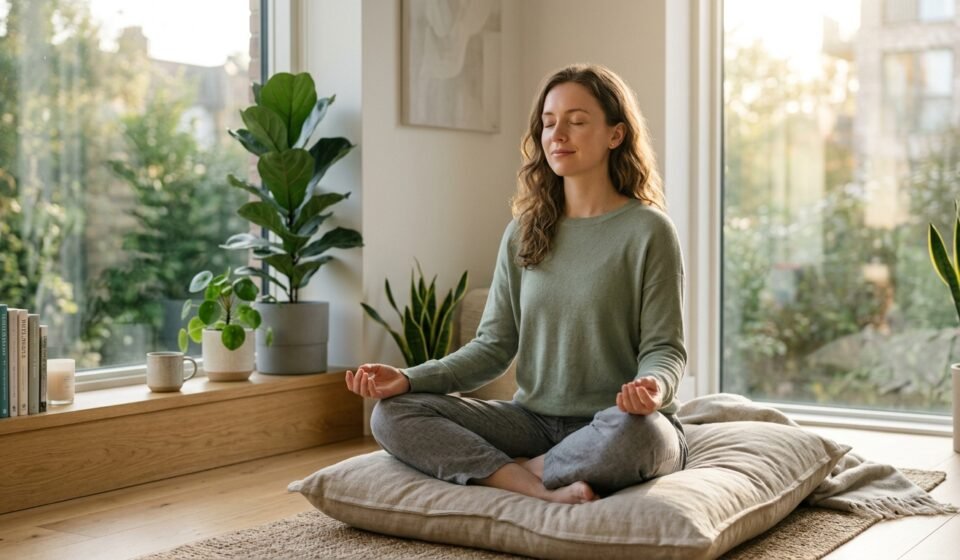

Mindfulness for Anxiety Simple Techniques That Work – Anxiety can make everyday life feel much more difficult than it should. A busy mind may constantly predict problems, replay past conversations, or worry about what could happen next. Physical symptoms such as muscle tension, rapid breathing, restlessness, and difficulty concentrating can make the experience even more overwhelming.
While anxiety can sometimes require professional treatment, mindfulness offers simple techniques that may help people manage anxious thoughts and reconnect with the present moment. Mindfulness is not about forcing the mind to become completely empty or pretending that worries do not exist. Instead, it involves paying attention to the present experience with greater awareness and less judgment.
The good news is that mindfulness does not require expensive equipment, a special location, or hours of meditation. Small practices can be incorporated into everyday routines and may become useful tools for handling stressful moments.
What Is Mindfulness?
Mindfulness is the practice of intentionally paying attention to the present moment. This means noticing thoughts, emotions, physical sensations, sounds, and surroundings without immediately judging or reacting to them.
When anxiety becomes intense, attention often moves away from the present. The mind may focus on possible future problems or repeatedly analyze something that happened in the past. Mindfulness can help interrupt this cycle by bringing attention back to what is happening right now.
For example, someone feeling anxious before an important meeting might spend hours thinking, “What if I make a mistake?” Instead of continuing to follow that thought, mindfulness encourages the person to recognize it as a thought, notice the physical sensations associated with anxiety, and gently return attention to breathing or the immediate environment.
This does not necessarily eliminate anxiety instantly. Rather, it can create a little distance between the person and the anxious thought.
How Mindfulness May Help With Anxiety
Anxiety often involves repetitive thinking and heightened awareness of potential threats. Mindfulness can encourage people to observe these experiences rather than automatically responding to them.
One important principle is non-judgmental awareness. Instead of thinking, “I should not feel anxious,” a person can recognize, “I am experiencing anxiety right now.” This subtle change can reduce the additional frustration that comes from fighting uncomfortable emotions.
Mindfulness may also encourage slower, more deliberate breathing and greater awareness of physical tension. Over time, regular practice can help people become more familiar with their personal signs of stress, making it easier to recognize anxiety before it becomes overwhelming.
However, mindfulness should not be viewed as a guaranteed cure for anxiety. People experience anxiety differently, and mindfulness works best as one possible tool within a broader approach to mental well-being.
1. Try One-Minute Mindful Breathing
Mindful breathing is one of the simplest techniques to practice.
Start by sitting comfortably and allowing your shoulders to relax. Take a natural breath and notice the sensation of breathing. Pay attention to the air moving through your nose, the movement of your chest, or the expansion of your abdomen.
There is no need to force deep breaths. Simply observe the natural rhythm.
When your mind wanders, gently return your attention to the breath. If you notice yourself thinking about work, relationships, finances, or tomorrow’s responsibilities, acknowledge the thought and return to breathing.
Even one minute can provide an opportunity to pause before reacting to anxious thoughts.
2. Use the Five-Senses Grounding Technique
Grounding can be particularly useful when anxiety causes you to feel disconnected from your surroundings.
Pause and identify things you can experience through your senses. You might notice five things you can see, four things you can physically feel, three sounds you can hear, two smells, and one taste.
The exact numbers are less important than the process of directing attention toward immediate sensory information.
For example, you might notice the texture of a chair, the sound of traffic outside, the temperature of the air, the color of a nearby object, and the taste of your drink.
This exercise encourages your attention to move away from imagined future scenarios and toward the environment around you.
3. Practice a Mindful Body Scan
Anxiety can create physical tension without you realizing it. A body scan helps you become aware of these sensations.
Sit or lie down somewhere comfortable. Begin by noticing your feet. Pay attention to sensations such as warmth, pressure, tingling, or tension. Slowly move your attention upward through your legs, stomach, chest, shoulders, arms, neck, and face.
You do not need to change anything.
If you discover tension in your jaw or shoulders, simply notice it. You can then choose to relax those muscles if it feels comfortable.
The goal is awareness rather than perfection. Becoming more familiar with physical signs of stress can help you recognize when your body is becoming tense.
4. Observe Anxious Thoughts Without Fighting Them
One of the most useful mindfulness skills is learning to observe thoughts without automatically believing or following them.
Imagine that you are worried about an upcoming event. Your mind might produce thoughts such as, “Something will go wrong,” or “I won’t be able to handle it.”
Instead of arguing with every thought, try labeling the experience:
“I am noticing a worried thought.”
This wording creates a small amount of distance. You are recognizing that the mind is producing a thought rather than treating the thought as an established fact.
Another visualization is to imagine thoughts as clouds moving across the sky. Some may be large and dark, while others may disappear quickly. You do not have to chase them away. Simply notice them and allow them to move on.
5. Eat One Meal Mindfully
Eating is an easy opportunity to practice mindfulness because it involves multiple senses.
Instead of eating while scrolling through your phone or watching television, spend a few minutes paying attention to your food. Notice its appearance, smell, temperature, texture, and flavor.
Take smaller bites and chew slowly.
You may discover that you normally eat automatically without noticing much about the experience. Mindful eating encourages you to slow down and become more aware of an ordinary activity.
This technique is not specifically about changing eating habits. Its primary purpose is to practice staying present.
6. Take a Mindful Walk
Walking can become a simple mindfulness exercise.
Rather than focusing entirely on your destination, pay attention to the movement involved in walking. Notice your feet touching the ground, the movement of your legs, your breathing, and the feeling of air against your skin.
You can also observe your surroundings. Notice trees, buildings, sounds, sunlight, shadows, or passing people without needing to analyze them.
A mindful walk can be particularly helpful for people who find traditional seated meditation difficult. Movement gives the mind another point of focus.
7. Use the STOP Technique During Stressful Moments
A short mindfulness sequence can be useful when anxiety suddenly increases.
S — Stop. Pause what you are doing for a moment.
T — Take a breath. Notice one or two natural breaths.
O — Observe. Ask yourself what you are thinking, feeling, and physically experiencing.
P — Proceed. Decide what action makes sense instead of reacting automatically.
For example, if you receive an upsetting message, you do not necessarily need to respond immediately. The STOP technique creates a brief space between the trigger and your reaction.
That pause can sometimes help you respond more thoughtfully.
8. Create a Mindful Morning Routine
Starting the day with constant notifications, social media, and stressful news can make the mind feel busy before the day has properly begun.
A simple mindful morning routine can create a calmer transition into the day.
For the first few minutes after waking, notice your breathing, stretch gently, drink water, or simply sit quietly. You might spend two minutes identifying how your body feels and what emotions are present.
You do not have to create a complicated routine. Consistency is often more practical than spending a long time on mindfulness occasionally.
9. Practice Mindfulness Before Sleep
An anxious mind can become particularly active at night. Concerns about tomorrow may make it difficult to relax.
A short mindfulness exercise before bed can help establish a transition between daytime activity and rest.
Lie comfortably and focus on your breathing. Notice sensations throughout your body. When thoughts about tomorrow appear, acknowledge them without trying to solve every problem immediately.
You can remind yourself that not every problem needs to be resolved at bedtime.
If worries continue to appear, gently return your attention to physical sensations such as the mattress supporting your body or the rhythm of your breathing.
10. Start With Just Five Minutes
Many people stop practicing mindfulness because they believe they need to meditate for 20 or 30 minutes every day.
That is not necessary for getting started.
Five minutes can be enough to establish a routine. Choose a consistent time and practice one technique. You might focus on breathing, perform a body scan, or simply observe sounds around you.
As the practice becomes familiar, you can gradually increase the duration if you want to.
The most important part is developing a habit rather than trying to achieve a perfect meditation session.
Common Mistakes to Avoid
Mindfulness can become frustrating when people have unrealistic expectations.
One common mistake is believing that successful mindfulness means having no thoughts. Thoughts are a normal part of the human mind. The objective is not to eliminate them but to notice when attention has wandered and gently bring it back.
Another mistake is judging yourself for becoming distracted. Getting distracted is not a failure. Every time you notice that your attention has wandered and return to the present moment, you are practicing mindfulness.
It is also important not to use mindfulness as a way to suppress emotions. If anxiety is present, the goal is not to pretend that everything is fine. Mindfulness encourages awareness of the experience without unnecessary judgment.
How to Build a Sustainable Mindfulness Habit
Start small and make the practice convenient.
Choose one activity that naturally fits into your schedule. For example, practice mindful breathing after waking up, use grounding during stressful moments, or take a mindful walk during a daily break.
You can also connect mindfulness to an existing habit. After brushing your teeth, spend one minute focusing on your breathing. Before eating lunch, take three slow breaths and notice your surroundings.
Keeping expectations realistic is important. Some days may feel calm, while other days may be filled with distracting thoughts. The goal is not to perform perfectly every time.
Instead, think of mindfulness as a skill that develops through repetition.
When to Seek Additional Support
Mindfulness can be a useful self-care strategy, but it should not replace professional support when anxiety is severe, persistent, or significantly interfering with daily life.
Consider speaking with a qualified mental health professional if anxiety regularly affects sleep, work, relationships, concentration, or your ability to perform normal activities.
Professional treatment can provide personalized strategies for understanding and managing anxiety. Mindfulness may complement those approaches, depending on an individual’s circumstances.
If a mindfulness exercise makes you feel significantly more distressed, stop the exercise and consider discussing your experience with a professional.
Final Thoughts
Mindfulness for anxiety does not require complicated meditation techniques. Simple practices such as mindful breathing, grounding through the senses, body scans, mindful walking, and observing thoughts can help create moments of awareness during stressful situations.
The central idea is straightforward: instead of becoming completely absorbed in anxious thoughts, pause and notice what is happening right now.
With regular practice, these small pauses can become part of everyday life. Mindfulness may not make every worry disappear, but it can help you develop a different relationship with anxious thoughts and uncomfortable emotions.
Start with just one technique for a few minutes each day. Keep the practice simple, be patient with yourself, and remember that mindfulness is about returning to the present—not achieving a perfectly quiet mind.