
The Powerful Connection Between Sleep and Mental Health – Sleep is one of the most important pillars of overall health, yet it is often overlooked in modern life. Many people sacrifice sleep to meet work deadlines, study for exams, manage family responsibilities, or spend more time online. While occasional sleep loss may seem harmless, consistently poor sleep can have a profound impact on mental health.
Research has repeatedly shown that sleep and mental health are closely connected. Quality sleep supports emotional well-being, cognitive function, stress management, and psychological resilience. At the same time, mental health conditions such as anxiety, depression, and chronic stress can interfere with healthy sleep patterns.
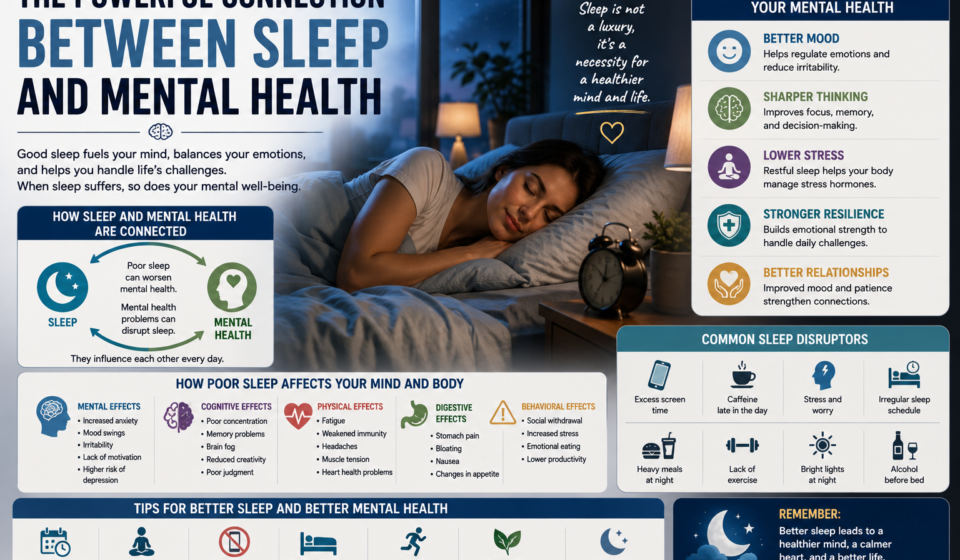
This relationship creates a two-way connection: poor sleep can contribute to mental health challenges, and mental health difficulties can make it harder to sleep. Understanding this powerful connection is essential for improving both physical and emotional well-being.
Why Sleep Matters
Sleep is not simply a period of rest. During sleep, the body and brain perform essential processes that support health and recovery.
While we sleep, the brain:
- Processes information and memories
- Regulates emotions
- Removes metabolic waste
- Restores cognitive function
- Supports learning and concentration
At the same time, the body:
- Repairs tissues
- Regulates hormones
- Strengthens the immune system
- Conserves energy
- Supports overall recovery
Without adequate sleep, these critical processes become disrupted, affecting both physical and mental health.
Understanding the Sleep-Mental Health Connection
Mental health and sleep influence each other continuously.
A single night of poor sleep may lead to irritability, difficulty concentrating, and increased stress. When sleep problems become chronic, emotional and psychological consequences often become more significant.
Similarly, people experiencing anxiety, depression, or emotional distress frequently report difficulties falling asleep, staying asleep, or achieving restful sleep.
This bidirectional relationship means that improving sleep often benefits mental health, while addressing mental health concerns can improve sleep quality.
How Sleep Affects Emotional Regulation
One of sleep’s most important functions is helping the brain regulate emotions.
When individuals are well-rested, they are generally better able to:
- Manage stress
- Respond calmly to challenges
- Control emotional reactions
- Maintain positive relationships
- Cope with setbacks
Sleep deprivation can significantly reduce emotional resilience.
People who do not get enough sleep often experience:
- Irritability
- Mood swings
- Increased frustration
- Emotional sensitivity
- Difficulty handling stress
Even minor inconveniences can feel overwhelming when emotional regulation is impaired by poor sleep.
Sleep and Anxiety
Anxiety and sleep problems frequently occur together.
How Poor Sleep Increases Anxiety
Sleep deprivation can make the brain more reactive to perceived threats. As a result, individuals may experience:
- Excessive worrying
- Racing thoughts
- Increased nervousness
- Difficulty relaxing
- Heightened stress responses
Research suggests that insufficient sleep can amplify activity in brain regions involved in fear and emotional processing.
How Anxiety Disrupts Sleep
At the same time, anxiety often interferes with sleep by causing:
- Overthinking at bedtime
- Difficulty falling asleep
- Frequent nighttime awakenings
- Restless sleep
Many people become trapped in a cycle where anxiety causes poor sleep, and poor sleep worsens anxiety.
Breaking this cycle often requires addressing both issues simultaneously.
Sleep and Depression
The relationship between sleep and depression is particularly strong.
Sleep disturbances are among the most common symptoms of depressive disorders.
People experiencing depression may struggle with:
- Insomnia
- Early morning awakening
- Excessive sleeping
- Poor sleep quality
At the same time, chronic sleep problems can increase the risk of developing depression.
Why Sleep Matters for Depression
Healthy sleep supports neurotransmitters that regulate mood, including serotonin and dopamine.
When sleep becomes disrupted for extended periods, mood regulation may suffer, contributing to:
- Persistent sadness
- Loss of motivation
- Emotional exhaustion
- Reduced enjoyment in daily activities
Improving sleep quality is often an important part of depression treatment and recovery.
The Impact of Sleep on Stress
Stress is a normal part of life, but sleep plays a crucial role in helping the body recover from stressful experiences.
During sleep, the body regulates cortisol, one of the primary stress hormones.
When sleep is inadequate:
- Cortisol levels may remain elevated
- Stress responses become more intense
- Recovery from challenges becomes more difficult
As stress accumulates, sleep often worsens, creating another self-reinforcing cycle.
Individuals who prioritize healthy sleep habits often report improved stress management and greater emotional resilience.
Sleep and Cognitive Function
Mental health involves more than emotions. Cognitive performance also plays a major role in psychological well-being.
Quality sleep supports:
- Attention
- Concentration
- Memory
- Learning
- Decision-making
- Problem-solving
Sleep deprivation can result in:
- Brain fog
- Forgetfulness
- Reduced productivity
- Difficulty focusing
- Poor judgment
Many people underestimate how significantly poor sleep affects everyday cognitive performance.
In some cases, symptoms caused by sleep deprivation may resemble anxiety, depression, or attention difficulties.
Sleep and Emotional Exhaustion
Emotional exhaustion occurs when ongoing stress depletes emotional resources.
Sleep is one of the body’s most important recovery mechanisms.
When people do not get enough sleep, emotional fatigue can worsen rapidly.
Common effects include:
- Feeling drained
- Reduced motivation
- Increased irritability
- Lower frustration tolerance
- Difficulty coping with responsibilities
Over time, poor sleep can contribute to burnout and emotional exhaustion, particularly among individuals experiencing high levels of stress.
The Role of Sleep in Building Resilience
Resilience refers to the ability to adapt to challenges and recover from adversity.
Sleep plays a critical role in developing and maintaining resilience.
Well-rested individuals are generally better able to:
- Handle stress effectively
- Maintain emotional balance
- Solve problems
- Recover from setbacks
- Adapt to change
By contrast, chronic sleep deprivation often reduces resilience and increases vulnerability to mental health difficulties.
Common Sleep Problems That Affect Mental Health
Several sleep disorders and disturbances can impact psychological well-being.
Insomnia
Insomnia involves difficulty falling asleep, staying asleep, or waking too early.
It is one of the most common sleep problems associated with anxiety and depression.
Sleep Apnea
Sleep apnea causes repeated interruptions in breathing during sleep.
Poor sleep quality resulting from sleep apnea may contribute to mood changes, fatigue, and concentration problems.
Restless Sleep
Frequent awakenings or light sleep can reduce restorative sleep and negatively affect mental health.
Irregular Sleep Schedules
Inconsistent sleep patterns can disrupt the body’s internal clock and affect mood regulation.
Identifying and addressing sleep problems is an important step toward improving overall well-being.
Warning Signs of Sleep-Related Mental Health Issues
Sleep may be affecting your mental health if you frequently experience:
- Persistent fatigue
- Difficulty concentrating
- Increased anxiety
- Mood swings
- Irritability
- Low motivation
- Emotional exhaustion
- Memory problems
- Frequent stress
- Feelings of overwhelm
If these symptoms continue despite adequate time in bed, professional evaluation may be helpful.
How to Improve Sleep for Better Mental Health
Fortunately, many evidence-based strategies can improve sleep quality.
Maintain a Consistent Sleep Schedule
Going to bed and waking up at the same time each day helps regulate the body’s internal clock.
Create a Relaxing Bedtime Routine
Activities such as reading, stretching, meditation, or taking a warm shower can signal the body that it is time to sleep.
Limit Screen Time Before Bed
Electronic devices emit blue light that may interfere with melatonin production and delay sleep.
Try reducing screen exposure at least one hour before bedtime.
Reduce Caffeine Intake
Avoiding caffeine later in the day can improve sleep quality and reduce nighttime wakefulness.
Optimize Your Sleep Environment
A comfortable, quiet, and dark sleeping environment promotes restorative sleep.
Stay Physically Active
Regular exercise can improve sleep quality and support mental health.
However, intense exercise immediately before bedtime may make it harder to fall asleep for some individuals.
Practice Stress Management
Mindfulness, deep breathing, journaling, and relaxation techniques can help calm the mind before sleep.
When to Seek Professional Help
Occasional sleep difficulties are normal. However, persistent sleep problems should not be ignored.
Consider seeking professional support if:
- Sleep problems last several weeks
- Fatigue affects daily functioning
- Anxiety or depression symptoms worsen
- Sleep disturbances interfere with work or relationships
Healthcare providers and mental health professionals can help identify underlying causes and recommend effective treatment options.
Addressing sleep issues early can prevent more significant mental health challenges from developing.
Building Long-Term Sleep Habits
Improving sleep is not about achieving perfection. It involves creating sustainable habits that support consistent rest and recovery.
Helpful long-term habits include:
- Prioritizing sleep as a health necessity
- Maintaining regular routines
- Managing stress proactively
- Protecting personal downtime
- Limiting overstimulation before bed
Small improvements made consistently can lead to meaningful changes over time.
Final Thoughts
The connection between sleep and mental health is powerful and undeniable. Sleep influences emotional regulation, stress management, cognitive performance, resilience, and overall psychological well-being. At the same time, mental health challenges such as anxiety, depression, and chronic stress can significantly affect sleep quality.
Because this relationship works in both directions, improving sleep can be one of the most effective ways to support mental health. Prioritizing rest, developing healthy sleep habits, and addressing sleep problems early can help individuals feel more emotionally balanced, mentally sharp, and physically healthy.
In a world that often encourages constant productivity, sleep should not be viewed as a luxury. It is a fundamental biological need and one of the most valuable investments you can make in your mental health and overall quality of life.