
Anxiety Symptoms You Should Never Ignore – Anxiety is a normal part of life. Everyone experiences feelings of worry, nervousness, or stress from time to time, especially when facing challenges, uncertainty, or major life changes. In many situations, anxiety serves a useful purpose by helping people stay alert and prepared.
However, anxiety can become a serious concern when it is persistent, overwhelming, and begins interfering with daily life. Millions of people worldwide experience anxiety disorders, making them among the most common mental health conditions. Anxiety disorders involve excessive fear, worry, or panic that can affect work, relationships, physical health, and overall wellbeing.
Recognizing anxiety symptoms early is important because timely intervention can prevent symptoms from worsening and improve quality of life. While occasional stress is normal, certain signs should never be ignored.
Understanding the Difference Between Normal Anxiety and an Anxiety Disorder
Feeling anxious before an exam, job interview, public presentation, or important decision is completely normal. In these situations, anxiety is usually temporary and disappears once the stressful event passes.
An anxiety disorder is different. It involves excessive and persistent worry that is difficult to control and often continues even when there is no immediate threat. These symptoms may last for months or even years and can significantly affect daily functioning.
If anxiety begins interfering with your ability to work, study, maintain relationships, or enjoy life, it may be time to seek professional support.
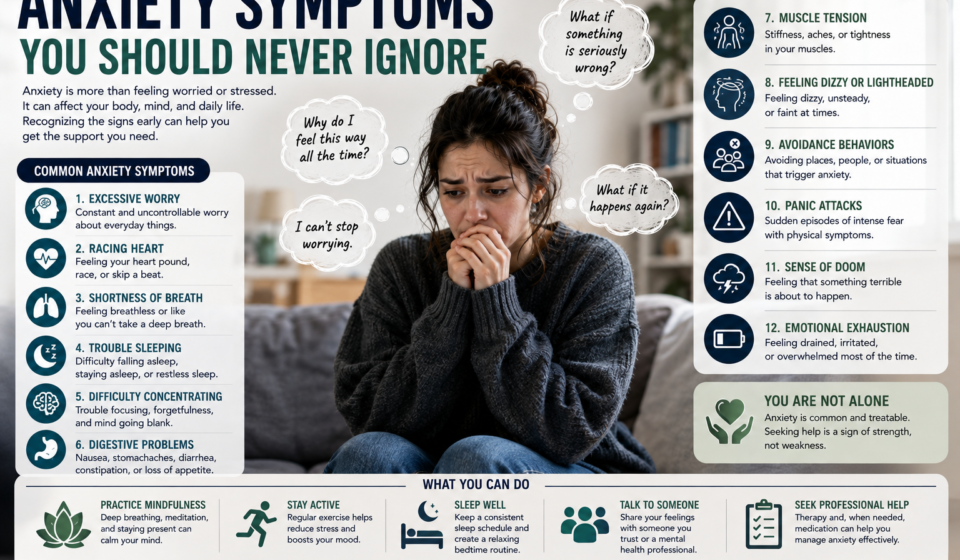
1. Constant and Excessive Worry
One of the most common symptoms of anxiety is excessive worrying.
People with anxiety disorders often spend large amounts of time worrying about:
- Health
- Finances
- Family
- Work performance
- Relationships
- Future events
While occasional concern is normal, excessive worry becomes problematic when it feels impossible to control.
You may find yourself constantly expecting the worst-case scenario even when there is little evidence that something bad will happen.
Persistent worry that continues for months should never be ignored.
2. Feeling Constantly Nervous or On Edge
Many individuals with anxiety describe feeling tense, restless, or unable to relax.
This symptom often includes:
- Feeling mentally overwhelmed
- Difficulty sitting still
- Constant anticipation of problems
- A sense that something bad is about to happen
Even during calm situations, the body may remain in a heightened state of alertness.
This ongoing tension can become physically and emotionally exhausting over time.
3. Racing Heart or Heart Palpitations
Anxiety frequently affects the cardiovascular system.
During periods of anxiety, the body’s fight-or-flight response activates, causing:
- Increased heart rate
- Heart palpitations
- Chest tightness
- A pounding heartbeat
Many people mistake these symptoms for heart problems or medical emergencies.
Although anxiety-related heart symptoms are common, persistent chest pain or severe cardiovascular symptoms should always be evaluated by a healthcare professional to rule out physical causes.
4. Shortness of Breath
Difficulty breathing is another symptom that often accompanies anxiety.
Individuals may experience:
- Rapid breathing
- Hyperventilation
- Tightness in the chest
- Feeling unable to take a deep breath
These sensations can be frightening and sometimes trigger panic attacks.
Because breathing difficulties can also be caused by medical conditions, persistent symptoms should be discussed with a healthcare provider.
5. Trouble Sleeping
Sleep problems and anxiety often occur together.
Common sleep-related symptoms include:
- Difficulty falling asleep
- Frequent waking during the night
- Restless sleep
- Racing thoughts at bedtime
- Waking up feeling exhausted
When the mind remains focused on worries, it becomes difficult to achieve restorative sleep.
Poor sleep can then increase anxiety, creating a cycle that becomes difficult to break.
6. Difficulty Concentrating
Anxiety can make it challenging to focus on tasks or conversations.
Many people report:
- Brain fog
- Forgetfulness
- Difficulty making decisions
- Trouble completing tasks
- Reduced productivity
When the brain is preoccupied with worries and perceived threats, concentration naturally suffers.
Persistent concentration difficulties should not be dismissed, particularly when they interfere with work, school, or daily responsibilities.
7. Physical Symptoms With No Clear Cause
Anxiety often produces real physical symptoms.
Common examples include:
- Headaches
- Muscle tension
- Fatigue
- Sweating
- Trembling
- Dizziness
- Tingling sensations
Many people become concerned that these symptoms indicate a serious illness.
While medical evaluation is important, anxiety itself can produce surprisingly powerful physical effects because the brain and body are closely connected.
8. Digestive Problems
The gut and brain are closely linked, which is why anxiety often affects digestion.
Symptoms may include:
- Stomach discomfort
- Nausea
- Diarrhea
- Constipation
- Bloating
- Loss of appetite
Some people experience digestive symptoms before stressful events, while others deal with ongoing gastrointestinal issues due to chronic anxiety.
If digestive symptoms persist, medical evaluation is recommended to rule out underlying physical conditions.
9. Avoiding Everyday Situations
Avoidance is one of the most important warning signs of anxiety disorders.
People may begin avoiding:
- Social events
- Public speaking
- Crowded places
- Phone calls
- Work responsibilities
- Travel
While avoidance provides temporary relief, it often strengthens anxiety in the long run.
Over time, life can become increasingly restricted as more situations are perceived as threatening.
10. Frequent Panic Attacks
Panic attacks are intense episodes of fear that can occur suddenly and unexpectedly.
Common symptoms include:
- Racing heartbeat
- Sweating
- Trembling
- Chest pain
- Dizziness
- Shortness of breath
- Fear of losing control
- Fear of dying
Because panic attacks can mimic serious medical conditions, they are often frightening experiences.
Anyone experiencing panic attacks should seek professional evaluation to determine the cause and receive appropriate treatment.
11. Constant Sense of Doom
A persistent feeling that something terrible is about to happen is another symptom that should not be ignored.
This may include:
- Catastrophic thinking
- Fear of future events
- Expecting negative outcomes
- Feeling unsafe despite no immediate danger
This symptom can become mentally exhausting and significantly reduce quality of life.
12. Emotional Exhaustion
Living with chronic anxiety requires enormous emotional energy.
Over time, individuals may experience:
- Burnout
- Irritability
- Mood changes
- Loss of motivation
- Emotional numbness
Many people become so accustomed to anxiety that they fail to recognize how much it is affecting their emotional wellbeing.
Persistent emotional exhaustion is a sign that support may be needed.
Why Anxiety Symptoms Are Often Ignored
Many people delay seeking help because they assume:
- “Everyone worries.”
- “I’m just stressed.”
- “It will go away on its own.”
- “I should be able to handle it.”
Unfortunately, untreated anxiety often becomes more severe over time.
Early recognition and intervention can prevent symptoms from escalating and improve long-term outcomes. Mental health professionals consistently emphasize that anxiety disorders are highly treatable when properly addressed.
When to Seek Professional Help
You should consider professional support if anxiety:
- Persists for several months
- Interferes with daily life
- Affects work or academic performance
- Damages relationships
- Causes frequent panic attacks
- Leads to avoidance behaviors
- Significantly impacts sleep or physical health
Seeking help does not mean your symptoms are severe. Early treatment often leads to better results and prevents symptoms from becoming more disruptive.
Effective Ways to Manage Anxiety
Fortunately, anxiety is highly manageable with the right approach.
Helpful strategies include:
Regular Exercise
Physical activity helps reduce stress hormones and improves mood.
Quality Sleep
Prioritizing healthy sleep habits can significantly reduce anxiety symptoms.
Mindfulness and Meditation
Mindfulness practices help bring attention back to the present moment instead of future worries.
Limiting Caffeine
Excessive caffeine can worsen symptoms such as racing thoughts, nervousness, and rapid heartbeat.
Strong Social Support
Connecting with trusted friends and family members can reduce feelings of isolation.
Professional Treatment
Therapy, particularly Cognitive Behavioral Therapy (CBT), is widely recognized as one of the most effective treatments for anxiety disorders. In some cases, medication may also be recommended by healthcare professionals.
Conclusion
Anxiety is a normal human experience, but persistent and overwhelming anxiety should never be ignored. Symptoms such as excessive worry, sleep disturbances, panic attacks, avoidance behaviors, concentration problems, digestive issues, and constant feelings of dread can signal an anxiety disorder that requires attention.
Recognizing these warning signs early is one of the most important steps toward protecting your mental health. Anxiety disorders are common, treatable, and manageable with the right support. Whether through lifestyle changes, therapy, professional guidance, or a combination of approaches, help is available.
If anxiety is interfering with your daily life, reaching out for support can be the first step toward greater peace of mind, improved wellbeing, and a healthier future.