
Anxiety Disorder Causes Symptoms and Treatment Options – Anxiety is a natural human response to stress, uncertainty, or potentially dangerous situations. It helps people stay alert, focused, and prepared for challenges. However, when anxiety becomes excessive, persistent, and difficult to control, it may develop into an anxiety disorder.
Anxiety disorders are among the most common mental health conditions worldwide, affecting millions of people of all ages. While occasional worry is a normal part of life, anxiety disorders involve intense fear or concern that interferes with daily activities, relationships, work, education, and overall wellbeing.
The good news is that anxiety disorders are highly treatable. Understanding their causes, recognizing symptoms, and exploring available treatment options can help individuals take the first step toward recovery and improved mental health.
What Is an Anxiety Disorder?
An anxiety disorder is a mental health condition characterized by excessive fear, worry, or nervousness that persists over time and affects daily functioning.
Unlike temporary anxiety caused by stressful events, anxiety disorders often continue even when there is no immediate threat or danger. The level of fear experienced is usually disproportionate to the actual situation.
People with anxiety disorders may struggle to control their worries, avoid certain situations, or experience physical symptoms that significantly impact their quality of life.
Anxiety disorders can affect anyone regardless of age, gender, background, or lifestyle. They often begin during childhood, adolescence, or early adulthood, although they can develop at any stage of life.
Types of Anxiety Disorders
Anxiety disorders include several related conditions.
Generalized Anxiety Disorder
Generalized Anxiety Disorder (GAD) involves persistent and excessive worry about various aspects of life, including work, health, finances, relationships, and everyday responsibilities.
Individuals often find it difficult to stop worrying even when there is little reason for concern.
Panic Disorder
Panic disorder involves recurring panic attacks, which are sudden episodes of intense fear accompanied by physical symptoms such as:
- Rapid heartbeat
- Sweating
- Trembling
- Chest pain
- Dizziness
- Shortness of breath
Many people experiencing a panic attack fear they are having a medical emergency.
Social Anxiety Disorder
Social anxiety disorder involves intense fear of social situations and concerns about being judged, embarrassed, or rejected by others.
Common triggers include:
- Public speaking
- Meeting new people
- Group conversations
- Social events
Specific Phobias
Specific phobias involve intense fear of particular objects or situations, such as:
- Heights
- Flying
- Needles
- Spiders
- Enclosed spaces
The fear often exceeds the actual level of danger.
Separation Anxiety Disorder
Although often associated with children, separation anxiety can also affect adults.
Individuals experience significant distress when separated from loved ones or when anticipating separation.
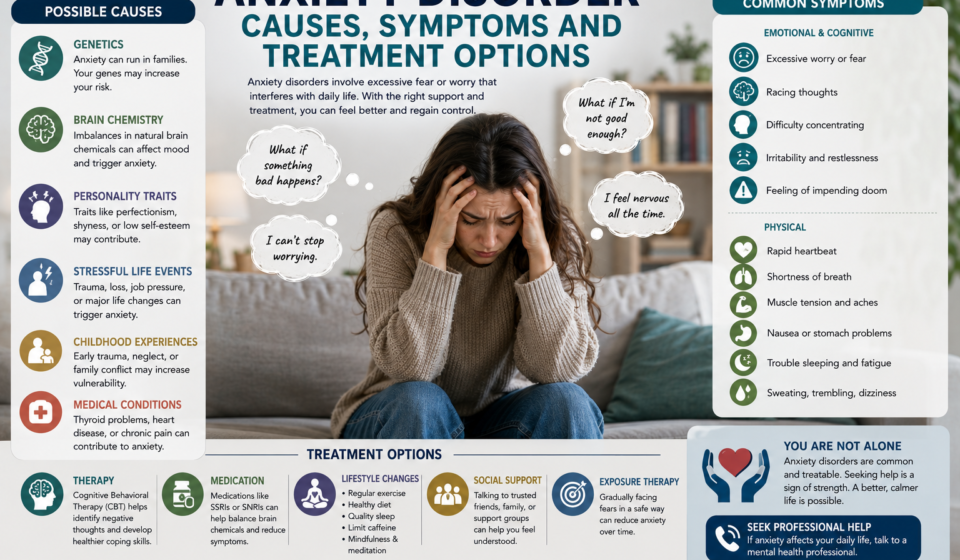
Common Causes of Anxiety Disorders
Anxiety disorders rarely result from a single cause. Instead, they usually develop through a combination of biological, psychological, and environmental factors.
Genetics
Research suggests that anxiety disorders can run in families.
People with close relatives who have anxiety disorders may have a higher likelihood of developing similar conditions.
Genetics do not guarantee that someone will experience anxiety, but they can increase vulnerability.
Brain Chemistry
The brain relies on chemical messengers called neurotransmitters to regulate mood and emotional responses.
Imbalances involving neurotransmitters such as serotonin, dopamine, and gamma-aminobutyric acid (GABA) may contribute to anxiety symptoms.
Scientists continue to study how brain chemistry influences anxiety disorders.
Personality Factors
Certain personality traits may increase the risk of developing anxiety.
Examples include:
- Perfectionism
- High sensitivity
- Low tolerance for uncertainty
- Tendency toward negative thinking
Individuals with these traits may be more likely to interpret situations as threatening.
Stressful Life Events
Major life changes and difficult experiences can trigger anxiety disorders.
Common examples include:
- Job loss
- Financial difficulties
- Divorce
- Serious illness
- Bereavement
- Trauma
- Academic pressure
While many people recover from stressful events, others may develop long-term anxiety.
Childhood Experiences
Early life experiences can shape emotional responses and coping mechanisms.
Factors associated with increased anxiety risk include:
- Childhood trauma
- Neglect
- Bullying
- Family conflict
- Overprotective parenting
These experiences may influence how individuals perceive safety and manage stress later in life.
Medical Conditions
Some physical health conditions can contribute to anxiety symptoms.
Examples include:
- Thyroid disorders
- Heart conditions
- Chronic pain
- Respiratory illnesses
- Hormonal imbalances
This is why professional evaluation is important when anxiety symptoms develop.
Symptoms of Anxiety Disorders
Anxiety disorders affect both the mind and body.
Emotional Symptoms
Common emotional symptoms include:
- Persistent worry
- Excessive fear
- Irritability
- Restlessness
- Feeling on edge
- Difficulty relaxing
- Sense of impending danger
These feelings may occur frequently and interfere with daily life.
Cognitive Symptoms
Anxiety can affect thinking patterns.
Individuals may experience:
- Racing thoughts
- Difficulty concentrating
- Overthinking
- Catastrophic thinking
- Constant self-doubt
- Fear of making mistakes
Mental exhaustion often develops as a result of continuous worry.
Physical Symptoms
Anxiety frequently produces physical symptoms because the body’s stress response becomes activated.
Common symptoms include:
- Rapid heartbeat
- Sweating
- Muscle tension
- Headaches
- Dizziness
- Trembling
- Fatigue
- Nausea
- Digestive discomfort
- Shortness of breath
These symptoms can be alarming and sometimes lead individuals to believe they have a serious medical condition.
Behavioral Symptoms
People with anxiety disorders often change their behavior in response to fear.
Examples include:
- Avoiding social situations
- Avoiding specific places
- Repeatedly seeking reassurance
- Excessive checking behaviors
- Difficulty making decisions
Avoidance may provide temporary relief but often strengthens anxiety over time.
How Anxiety Disorders Affect Daily Life
Anxiety disorders can have a significant impact on overall wellbeing.
Work and Career
Individuals may struggle with:
- Concentration
- Productivity
- Workplace communication
- Meeting deadlines
- Public speaking
Career advancement opportunities may be missed because of fear or avoidance.
Education
Students with anxiety disorders often experience:
- Test anxiety
- Difficulty participating in class
- Concentration problems
- Fear of failure
Academic performance may suffer despite strong abilities.
Relationships
Anxiety can affect relationships with family, friends, and romantic partners.
Common challenges include:
- Miscommunication
- Reassurance seeking
- Social withdrawal
- Irritability
- Emotional exhaustion
Supportive relationships are important but can become strained when anxiety is unmanaged.
Physical Health
Chronic anxiety may contribute to:
- Sleep problems
- Fatigue
- Headaches
- Digestive issues
- Increased stress hormone levels
Mental and physical health are closely connected.
Treatment Options for Anxiety Disorders
Fortunately, anxiety disorders respond well to treatment.
Many individuals experience significant improvement through professional support and healthy lifestyle changes.
Cognitive Behavioral Therapy
Cognitive Behavioral Therapy (CBT) is one of the most effective treatments for anxiety disorders.
CBT helps individuals:
- Identify unhelpful thought patterns
- Challenge irrational fears
- Develop healthier coping strategies
- Reduce avoidance behaviors
The goal is to change the relationship between thoughts, emotions, and behaviors.
Many people experience long-lasting benefits from CBT.
Exposure Therapy
Exposure therapy is often used for phobias, panic disorder, and social anxiety.
This approach involves gradually facing feared situations in a safe and controlled way.
Repeated exposure helps reduce fear over time and increases confidence.
Medication
Medication may be recommended in some cases.
Common options include:
- Selective Serotonin Reuptake Inhibitors (SSRIs)
- Serotonin-Norepinephrine Reuptake Inhibitors (SNRIs)
- Anti-anxiety medications
Medication can help reduce symptoms and improve daily functioning, especially when combined with therapy.
Treatment decisions should always be made in consultation with qualified healthcare professionals.
Lifestyle Changes That Support Recovery
Professional treatment is important, but daily habits can also make a significant difference.
Regular Exercise
Physical activity helps reduce stress hormones and promotes the release of mood-enhancing chemicals.
Activities such as:
- Walking
- Running
- Swimming
- Cycling
- Yoga
can help improve mental wellbeing.
Quality Sleep
Sleep and anxiety are closely connected.
Improving sleep habits may involve:
- Maintaining a regular schedule
- Limiting screen time before bed
- Creating a relaxing nighttime routine
Better sleep often leads to lower anxiety levels.
Healthy Nutrition
A balanced diet supports both physical and mental health.
Limiting excessive caffeine and highly processed foods may help reduce anxiety symptoms for some individuals.
Mindfulness and Meditation
Mindfulness practices encourage individuals to focus on the present moment rather than future worries.
Benefits may include:
- Reduced stress
- Improved emotional regulation
- Greater self-awareness
- Better concentration
Even a few minutes of daily mindfulness practice can be beneficial.
Social Support
Strong social connections play an important role in recovery.
Talking openly with trusted friends, family members, or support groups can reduce feelings of isolation and provide emotional encouragement.
When to Seek Professional Help
Many people experience occasional anxiety, but professional support may be necessary when symptoms:
- Persist for several months
- Interfere with daily activities
- Affect relationships
- Disrupt work or school performance
- Cause frequent panic attacks
- Lead to significant distress
Seeking help early often leads to better outcomes and prevents symptoms from becoming more severe.
Mental health professionals can provide personalized treatment plans tailored to individual needs.
Reducing the Stigma Around Anxiety Disorders
Despite increased awareness, many people still hesitate to seek help because of stigma.
Some fear being judged, misunderstood, or perceived as weak.
In reality, anxiety disorders are legitimate medical conditions that affect millions of people worldwide.
Seeking support demonstrates strength, self-awareness, and a commitment to personal wellbeing.
The more openly society discusses mental health, the easier it becomes for individuals to access the help they need.
Conclusion
Anxiety disorders are common but highly treatable mental health conditions. They can affect thoughts, emotions, physical health, relationships, and daily functioning, but they do not have to control a person’s life.
Understanding the causes, recognizing symptoms, and exploring treatment options are important steps toward recovery. Whether through therapy, medication, lifestyle changes, or a combination of approaches, effective support is available.
With proper treatment and consistent self-care, many individuals learn to manage anxiety successfully and enjoy healthier, more fulfilling lives. If anxiety is interfering with your wellbeing, reaching out for professional guidance can be the beginning of positive and lasting change.