Health Anxiety Why More People Are Worried About Their Health

Health Anxiety Why More People Are Worried About Their Health – Health is one of the most valuable aspects of life, so it is natural to feel concerned when something does not seem right. A headache, a cough, or an unusual sensation can prompt questions about whether something is wrong. For most people, these concerns fade after receiving reassurance or medical advice. However, for others, worries about health become persistent, overwhelming, and difficult to control.
This growing phenomenon is known as health anxiety. In recent years, more people have reported excessive concerns about their health, symptoms, and the possibility of serious illness. Increased access to health information, online symptom searches, social media discussions, and constant exposure to medical news have all contributed to this trend. Understanding health anxiety is important because it can significantly affect mental wellbeing, relationships, work performance, and overall quality of life.
What Is Health Anxiety
Health anxiety refers to excessive worry about having or developing a serious illness. Individuals may become highly focused on normal bodily sensations or minor symptoms and interpret them as signs of a severe medical condition. Even after medical evaluations show no serious problem, the fear often continues.
Although “health anxiety” is a commonly used term, it is closely related to a condition known as illness anxiety disorder. People experiencing this condition may spend large amounts of time thinking about their health, researching diseases, checking their bodies for symptoms, or seeking reassurance from healthcare professionals and loved ones.
Health anxiety is not simply being cautious about health. The key difference is that the level of worry becomes disproportionate to the actual medical risk and begins interfering with daily life.
Why Health Anxiety Is Becoming More Common
Several factors have contributed to the increasing number of people struggling with health anxiety.
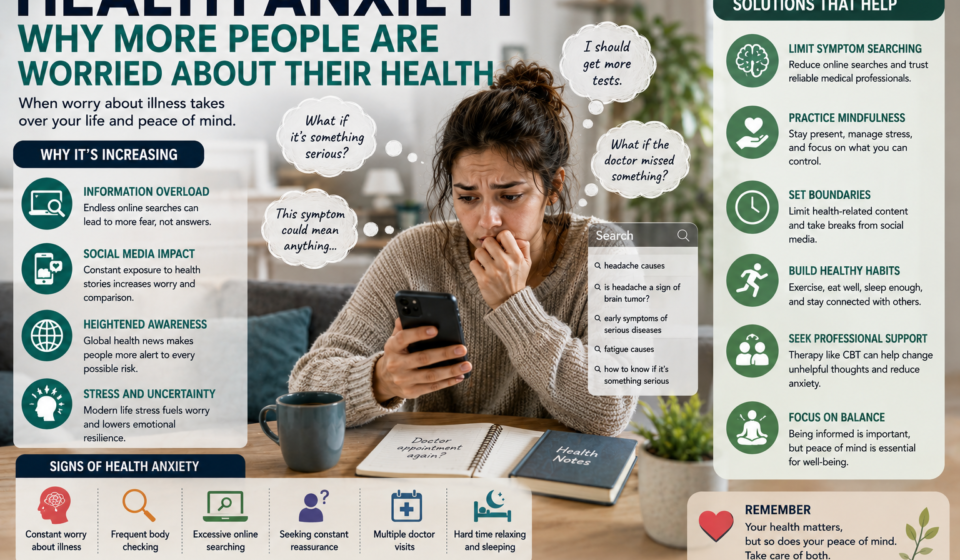
Unlimited Access to Medical Information
The internet has made health information available within seconds. While access to knowledge can be beneficial, it can also become overwhelming.
Many people search online after experiencing a minor symptom. A harmless headache may quickly lead to articles about serious neurological conditions. A mild cough may trigger concerns about severe respiratory illnesses.
This behavior, sometimes called “cyberchondria,” can intensify fears rather than provide reassurance. Instead of reducing uncertainty, excessive searching often creates more questions and anxiety.
Social Media and Health Content
Health-related content is now widely shared across social media platforms. Stories about rare diseases, medical emergencies, and personal health struggles can spread rapidly.
While many of these stories are intended to educate or inspire, constant exposure to health-related content may increase awareness of potential illnesses and heighten anxiety among vulnerable individuals.
People may begin comparing their own symptoms to those described online, leading to unnecessary worry.
Increased Awareness of Health Risks
Global health events over the past decade have encouraged people to pay closer attention to their physical wellbeing.
While awareness is important, heightened vigilance can sometimes become excessive. Research and public discussions have highlighted how major health crises can increase health-related fears and symptom monitoring.
Information Overload
Modern life exposes people to a constant stream of health information.
News articles, medical podcasts, online forums, health influencers, and advertisements all compete for attention. This continuous flow of information can make it difficult to distinguish between legitimate concerns and unnecessary worry.
Common Signs of Health Anxiety
Health anxiety can affect thoughts, emotions, and behaviors.
Common signs include:
- Constantly worrying about serious illnesses
- Frequently checking the body for symptoms
- Repeatedly searching symptoms online
- Seeking reassurance from doctors, friends, or family
- Worrying that medical tests missed something
- Monitoring bodily sensations excessively
- Avoiding health-related information due to fear
- Experiencing distress that interferes with daily activities
Many people become trapped in a cycle where reassurance provides only temporary relief before new worries emerge.
How Health Anxiety Affects Daily Life
Health anxiety can have a significant impact on overall wellbeing.
Emotional Distress
Persistent worry can create ongoing feelings of fear, tension, and uncertainty. Individuals may spend hours each day thinking about potential illnesses.
This constant mental strain often contributes to:
- Anxiety
- Irritability
- Frustration
- Difficulty relaxing
- Emotional exhaustion
Impact on Relationships
Loved ones often become sources of reassurance.
People with health anxiety may repeatedly ask questions such as:
- “Do you think this symptom is serious?”
- “Does this look normal to you?”
- “Should I see another doctor?”
While family members usually want to help, repeated reassurance-seeking can create stress within relationships. Medical experts note that reassurance often provides only short-term relief and may unintentionally reinforce anxiety over time.
Reduced Productivity
Health worries can make it difficult to focus on work, school, or personal responsibilities.
Time that could be spent on productive activities may instead be devoted to:
- Symptom research
- Medical appointments
- Body checking
- Health-related discussions
Over time, concentration and performance may suffer.
The Physical Effects of Health Anxiety
One of the most challenging aspects of health anxiety is that anxiety itself can create physical symptoms.
Common anxiety-related symptoms include:
- Headaches
- Rapid heartbeat
- Muscle tension
- Dizziness
- Fatigue
- Shortness of breath
- Stomach discomfort
These symptoms are real, but they are often caused or intensified by anxiety rather than a serious illness. Unfortunately, individuals with health anxiety may interpret these sensations as evidence that something is medically wrong, further fueling the cycle of worry.
The Role of Reassurance Seeking
Many people assume that seeking reassurance is the solution to health anxiety.
A doctor visit, negative test result, or comforting conversation may temporarily reduce fear. However, reassurance often provides only short-term relief.
Soon afterward, a new symptom or concern may emerge, restarting the cycle.
Behavioral experts identify repeated checking, symptom monitoring, and reassurance-seeking as important factors that help maintain health anxiety over time.
How Online Searches Make Anxiety Worse
Searching symptoms online has become one of the most common responses to health concerns.
The problem is that search engines typically display a wide range of possible explanations, including rare and serious conditions.
For example:
- A headache might be linked to a brain tumor.
- Fatigue might be linked to severe disease.
- Muscle pain might be linked to neurological disorders.
When people focus on worst-case scenarios, anxiety increases significantly.
Many individuals find themselves repeatedly researching symptoms, hoping to find reassurance but instead becoming more worried. This pattern is widely recognized as a major contributor to modern health anxiety.
Strategies for Managing Health Anxiety
Fortunately, health anxiety is treatable, and many people learn effective ways to reduce its impact.
Limit Symptom Searching
Avoid spending excessive time researching symptoms online.
If you have a genuine health concern, consult a qualified healthcare professional rather than relying on endless internet searches.
Reduce Reassurance Seeking
Although reassurance feels helpful in the moment, constantly seeking it can strengthen anxiety over time.
Learning to tolerate uncertainty is often an important part of recovery.
Focus on Facts Rather Than Fear
When anxiety arises, ask yourself:
- What evidence supports this fear?
- What evidence suggests a less serious explanation?
- Have medical professionals already evaluated this concern?
Balanced thinking can reduce catastrophic interpretations.
Practice Stress Management
Healthy habits can help lower overall anxiety levels, including:
- Regular exercise
- Quality sleep
- Mindfulness practices
- Deep breathing exercises
- Time in nature
- Social connection
Consider Professional Support
Cognitive Behavioral Therapy (CBT) is widely recognized as one of the most effective approaches for managing health anxiety. Mental health professionals can help individuals identify unhelpful thinking patterns and develop healthier coping strategies.
Conclusion
Health anxiety is becoming increasingly common in a world filled with instant information, online symptom checkers, social media health content, and constant exposure to medical news. While caring about your health is normal and beneficial, excessive worry can create significant emotional distress and interfere with daily life.
The good news is that health anxiety is manageable. By understanding the condition, limiting excessive symptom research, reducing reassurance-seeking behaviors, and developing healthier coping strategies, individuals can break the cycle of fear and regain peace of mind.
Being informed about health is important. However, true wellbeing comes from balancing awareness with perspective, allowing concern to guide healthy decisions without taking control of your life.