
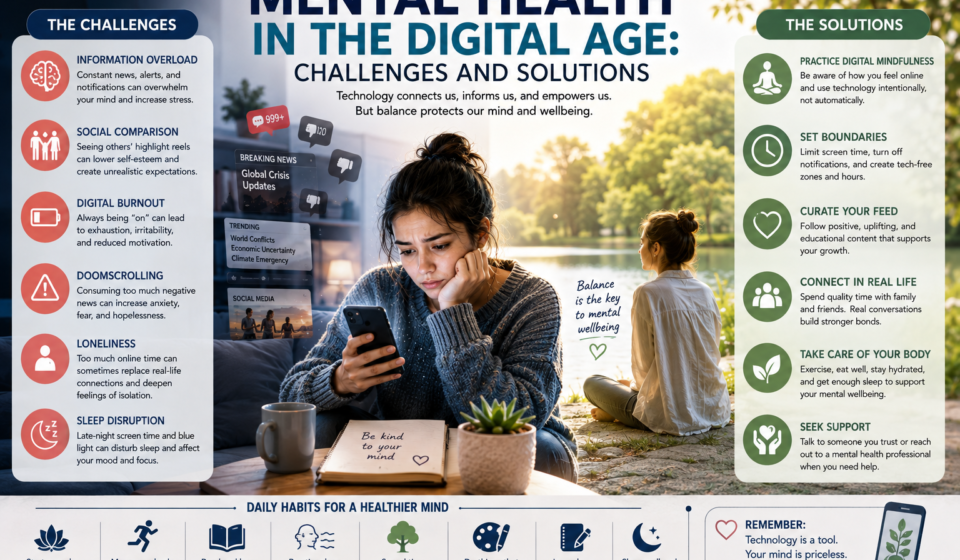

Mental Health in the Digital Age: Challenges and Solutions – The digital age has transformed nearly every aspect of modern life. Smartphones, social media platforms, artificial intelligence, video conferencing, and instant communication have made it easier than ever to connect, learn, and work. While these technological advancements offer countless benefits, they have also introduced new challenges for mental health.
Today, people spend a significant portion of their lives online. From checking emails and scrolling through social media feeds to attending virtual meetings and consuming digital content, technology has become deeply integrated into daily routines. Although digital tools can improve convenience and productivity, excessive use and unhealthy online habits can negatively affect emotional wellbeing.
Understanding the relationship between technology and mental health is essential for navigating the digital world in a healthy and balanced way. By recognizing both the challenges and solutions, individuals can enjoy the benefits of technology while protecting their psychological wellbeing.
The Rise of Digital Living
Over the past two decades, technology has fundamentally changed how people communicate, work, shop, learn, and entertain themselves.
Today, many individuals:
- Begin their day by checking their phones
- Spend hours on social media platforms
- Work remotely using digital tools
- Stream entertainment online
- Receive constant notifications throughout the day
- Rely on technology for information and communication
While these changes have increased efficiency and accessibility, they have also blurred the boundaries between work, personal life, and rest.
As digital connectivity continues to expand, maintaining mental health has become an increasingly important concern.
How Technology Impacts Mental Health
Technology itself is neither inherently good nor bad. Its impact largely depends on how it is used.
Digital tools can support mental wellbeing by providing education, social connection, and access to healthcare resources. However, excessive or unhealthy use can contribute to stress, anxiety, and emotional exhaustion.
The challenge lies in finding a healthy balance.
Challenge 1: Information Overload
One of the most significant mental health challenges in the digital age is information overload.
Every day, people are exposed to:
- Breaking news
- Social media updates
- Emails
- Notifications
- Online advertisements
- Video content
- Podcasts
- Articles and blogs
The brain is not designed to process an endless stream of information without rest.
Information overload can lead to:
- Mental fatigue
- Reduced concentration
- Stress
- Decision fatigue
- Increased anxiety
Many people feel overwhelmed by the sheer volume of information they encounter each day.
Solution: Practice Intentional Consumption
Rather than constantly consuming information, create boundaries around digital content.
Helpful strategies include:
- Limiting news consumption
- Turning off nonessential notifications
- Scheduling screen-free periods
- Choosing reliable information sources
Intentional consumption allows the mind to process information more effectively while reducing stress.
Challenge 2: Social Media Comparison
Social media has created unprecedented opportunities for connection. However, it has also encouraged constant comparison.
Users are often exposed to carefully curated images of:
- Success
- Wealth
- Relationships
- Travel
- Fitness achievements
- Lifestyle milestones
While these posts may represent only a small portion of reality, they can create unrealistic expectations.
Many individuals begin comparing their everyday experiences to the highlight reels of others.
This comparison may contribute to:
- Low self-esteem
- Anxiety
- Feelings of inadequacy
- Reduced life satisfaction
Solution: Use Social Media Mindfully
Healthy social media habits include:
- Limiting screen time
- Following positive and educational accounts
- Unfollowing content that negatively affects mood
- Remembering that online content rarely reflects the complete picture
Using social media intentionally can help reduce comparison and improve emotional wellbeing.
Challenge 3: Digital Burnout
Technology has made it possible to work from virtually anywhere. While this flexibility offers many advantages, it can also make it difficult to disconnect.
Many professionals experience:
- Constant emails
- After-hours messages
- Virtual meeting fatigue
- Increased workload expectations
The result is often digital burnout, a state of emotional, mental, and physical exhaustion caused by prolonged digital engagement.
Common symptoms include:
- Fatigue
- Irritability
- Reduced motivation
- Difficulty concentrating
- Emotional exhaustion
Solution: Establish Clear Boundaries
Protecting mental health requires creating healthy boundaries between work and personal life.
Consider:
- Setting specific work hours
- Taking regular breaks
- Avoiding work emails during personal time
- Scheduling offline activities
Boundaries help create opportunities for recovery and prevent chronic stress.
Challenge 4: Doomscrolling and Negative Content
Doomscrolling has become increasingly common in the digital age.
This behavior involves continuously consuming negative news and distressing information online.
While staying informed is important, excessive exposure to negative content can contribute to:
- Anxiety
- Stress
- Fear
- Emotional exhaustion
- Sleep disturbances
The human brain naturally pays attention to threats, making doomscrolling particularly difficult to resist.
Solution: Create Healthier News Habits
Instead of checking news constantly:
- Set specific times for updates
- Limit exposure before bedtime
- Focus on trusted sources
- Balance negative news with positive content
A more balanced approach can help reduce anxiety while keeping you informed.
Challenge 5: Loneliness Despite Constant Connectivity
Ironically, technology can sometimes increase feelings of loneliness.
Although people may have hundreds of online connections, digital interactions do not always provide the same emotional benefits as face-to-face relationships.
Excessive online communication can sometimes replace deeper, more meaningful social experiences.
This may lead to:
- Isolation
- Reduced social satisfaction
- Emotional disconnection
- Loneliness
Solution: Prioritize Real-Life Relationships
Technology should enhance relationships rather than replace them.
Make time for:
- In-person conversations
- Family gatherings
- Community activities
- Shared experiences with friends
Strong social connections remain one of the most important factors in maintaining mental health.
Challenge 6: Sleep Disruption
Many people use smartphones, tablets, or computers late into the evening.
Unfortunately, excessive screen use before bed can interfere with healthy sleep patterns.
Factors contributing to poor sleep include:
- Blue light exposure
- Mental stimulation
- Social media engagement
- Late-night news consumption
Poor sleep can negatively affect:
- Mood
- Focus
- Emotional regulation
- Stress management
Solution: Create a Digital Curfew
Consider disconnecting from screens at least one hour before bedtime.
Other helpful habits include:
- Reading a physical book
- Practicing relaxation techniques
- Establishing a consistent sleep schedule
- Keeping devices out of the bedroom
Better sleep supports both mental and physical health.
The Positive Side of Technology for Mental Health
While technology presents challenges, it also offers valuable opportunities for improving mental wellbeing.
Increased Access to Mental Health Resources
People can now access:
- Online therapy
- Mental health apps
- Educational resources
- Support communities
- Self-help programs
These tools make mental health support more accessible than ever before.
Greater Awareness
Social media and digital platforms have helped increase awareness about mental health issues.
Topics that were once stigmatized are now discussed more openly, encouraging individuals to seek support when needed.
Virtual Support Networks
Online communities can provide connection and encouragement for people facing similar challenges.
For individuals who feel isolated, digital support networks may offer valuable emotional support and understanding.
Building Healthy Digital Habits
Maintaining mental health in the digital age requires intentional choices.
Healthy digital habits include:
Practice Digital Mindfulness
Pay attention to:
- How technology affects your mood
- How much time you spend online
- Which activities improve or worsen your wellbeing
Awareness is the first step toward positive change.
Schedule Regular Breaks
Taking breaks from screens allows the brain to rest and recover.
Simple options include:
- Walking outdoors
- Stretching
- Deep breathing exercises
- Spending time with loved ones
Focus on Quality Over Quantity
Rather than spending hours online, prioritize meaningful digital experiences.
Choose content that:
- Educates
- Inspires
- Supports personal growth
- Encourages healthy connections
Quality engagement often leads to better mental outcomes than excessive consumption.
The Future of Mental Health and Technology
As artificial intelligence, virtual reality, and digital communication continue to evolve, the relationship between technology and mental health will become even more important.
Future innovations may offer new opportunities for:
- Early mental health screening
- Personalized wellness support
- Improved access to therapy
- Enhanced mental health education
At the same time, individuals will need to remain mindful of potential risks such as digital addiction, information overload, and excessive screen time.
Balancing technological advancement with emotional wellbeing will be one of the defining challenges of the coming decade.
Conclusion
Mental health in the digital age is shaped by both opportunities and challenges. Technology has improved communication, education, and access to mental health resources, but it has also contributed to information overload, social comparison, digital burnout, loneliness, and sleep disruption.
The key is not to avoid technology but to use it intentionally and responsibly. By establishing healthy boundaries, limiting excessive screen time, prioritizing real-world relationships, and practicing digital mindfulness, individuals can protect their emotional wellbeing while enjoying the benefits of modern technology.
In an increasingly connected world, mental health deserves the same attention and care as physical health. Developing healthy digital habits today can lead to greater resilience, balance, and wellbeing in the years ahead.