
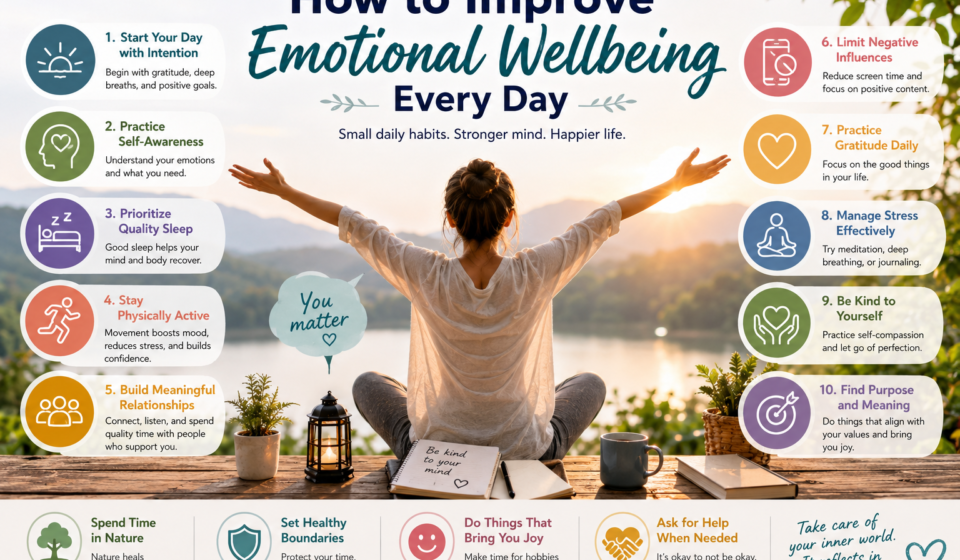

How to Improve Emotional Wellbeing Every Day – Emotional wellbeing plays a crucial role in how we think, feel, and interact with the world around us. It influences our ability to handle stress, build healthy relationships, make decisions, and enjoy life. While physical health often receives significant attention, emotional wellbeing is equally important for achieving a balanced and fulfilling life.
In today’s fast-paced and highly connected world, many people face daily pressures from work, finances, family responsibilities, and constant exposure to information. These challenges can affect emotional health if they are not managed effectively. Fortunately, emotional wellbeing is not something people either have or lack—it is a skill that can be developed through consistent habits and intentional self-care.
By making small positive changes every day, you can strengthen your emotional wellbeing and improve your overall quality of life.
What Is Emotional Wellbeing?
Emotional wellbeing refers to the ability to understand, manage, and express emotions in healthy ways. It also involves maintaining a positive outlook, coping effectively with challenges, and developing resilience during difficult times.
Having good emotional wellbeing does not mean feeling happy all the time. Everyone experiences stress, sadness, frustration, and disappointment. Instead, emotional wellbeing means being able to navigate these emotions without becoming overwhelmed by them.
People with strong emotional wellbeing often:
- Understand their emotions
- Manage stress effectively
- Maintain healthy relationships
- Adapt to change
- Recover from setbacks
- Feel a sense of purpose and satisfaction
Developing these abilities can lead to greater happiness and long-term mental wellness.
Why Emotional Wellbeing Matters
Emotional wellbeing affects nearly every aspect of life.
When emotional health is strong, people are more likely to:
- Handle stress productively
- Build meaningful relationships
- Stay motivated and focused
- Make thoughtful decisions
- Maintain physical health
- Experience greater life satisfaction
Conversely, poor emotional wellbeing can contribute to chronic stress, anxiety, relationship difficulties, and reduced productivity.
Investing in emotional health is one of the most valuable steps you can take for your overall well-being.
1. Start Your Day With Intention
The way you begin your morning can influence your mood for the rest of the day.
Instead of immediately checking emails or social media, spend a few moments focusing on positive intentions.
Consider:
- Taking a few deep breaths
- Practicing gratitude
- Setting daily goals
- Reading something inspiring
Starting the day with purpose can create a sense of control and positivity before external demands begin competing for your attention.
2. Practice Self-Awareness
Self-awareness is the foundation of emotional wellbeing. Understanding your emotions allows you to respond thoughtfully rather than reacting impulsively.
Throughout the day, ask yourself:
- What am I feeling right now?
- Why am I feeling this way?
- What do I need at this moment?
Keeping a journal can be especially helpful. Writing down thoughts and emotions provides clarity and can reveal patterns that might otherwise go unnoticed.
The more aware you become of your emotional state, the easier it is to manage challenges effectively.
3. Prioritize Quality Sleep
Sleep and emotional wellbeing are closely connected. Poor sleep can increase irritability, anxiety, and difficulty concentrating.
To improve sleep quality:
- Maintain a consistent bedtime
- Reduce screen time before bed
- Create a relaxing nighttime routine
- Avoid excessive caffeine late in the day
Most adults benefit from seven to nine hours of sleep each night. Prioritizing rest allows both the body and mind to recover and function optimally.
4. Stay Physically Active
Exercise is not only beneficial for physical health but also for emotional wellness.
Physical activity helps:
- Reduce stress hormones
- Improve mood
- Increase energy levels
- Enhance self-confidence
You do not need an intense fitness routine to experience benefits. Activities such as walking, yoga, cycling, dancing, or swimming can positively impact emotional wellbeing.
Even twenty minutes of movement each day can make a noticeable difference.
5. Build Meaningful Relationships
Strong social connections are among the most important factors influencing emotional health.
Humans naturally seek connection and belonging. Supportive relationships provide encouragement, comfort, and perspective during difficult times.
Ways to strengthen relationships include:
- Spending quality time with loved ones
- Listening actively
- Expressing appreciation
- Being honest about your feelings
- Offering support to others
Meaningful relationships help reduce loneliness and increase overall happiness.
6. Limit Negative Influences
Modern technology offers countless benefits, but excessive exposure to negative information can affect emotional wellbeing.
Constant news updates, social media comparisons, and online conflicts may contribute to stress and emotional exhaustion.
Consider:
- Setting limits on social media use
- Taking regular digital breaks
- Following positive and educational content
- Avoiding unnecessary online arguments
Creating healthier digital habits can help protect your emotional health.
7. Practice Gratitude Daily
Gratitude is one of the simplest and most effective habits for improving emotional wellbeing.
Focusing on positive aspects of life can shift attention away from stress and negativity.
A simple gratitude practice might involve writing down:
- Three things you appreciate
- Positive experiences from the day
- People who have supported you
Over time, gratitude can improve optimism and increase life satisfaction.
8. Learn Healthy Stress Management Techniques
Stress is a normal part of life, but chronic stress can negatively affect emotional health.
Effective stress-management strategies include:
- Deep breathing exercises
- Meditation
- Mindfulness practices
- Spending time in nature
- Listening to music
- Taking short breaks throughout the day
The goal is not to eliminate stress completely but to develop healthy ways to respond to it.
Regular stress management can significantly improve emotional resilience.
9. Develop Self-Compassion
Many people are highly critical of themselves. They focus on mistakes, shortcomings, and perceived failures while overlooking achievements and strengths.
Self-compassion involves treating yourself with the same kindness you would offer a friend.
Instead of saying:
“I failed.”
Try saying:
“I made a mistake, but I can learn from it.”
Practicing self-compassion helps reduce emotional distress and promotes healthier self-esteem.
10. Engage in Activities That Bring Joy
Life can become consumed by responsibilities and obligations. Making time for enjoyable activities is an important part of emotional wellbeing.
Examples include:
- Reading
- Painting
- Gardening
- Playing music
- Cooking
- Photography
- Traveling
- Learning new skills
Activities that bring joy provide opportunities for relaxation, creativity, and personal fulfillment.
Even small moments of enjoyment can improve mood and reduce stress.
11. Focus on What You Can Control
Many people spend significant energy worrying about situations beyond their control.
Examples include:
- Other people’s opinions
- Global events
- Future uncertainties
- Unexpected challenges
While these concerns are understandable, excessive focus on uncontrollable factors often increases anxiety.
Instead, direct attention toward:
- Your actions
- Your habits
- Your mindset
- Your daily choices
Focusing on what you can influence creates a greater sense of empowerment and emotional stability.
12. Spend Time in Nature
Nature has a unique ability to calm the mind and restore emotional balance.
Research continues to show that spending time outdoors can:
- Reduce stress
- Improve mood
- Increase relaxation
- Enhance mental clarity
Simple ways to connect with nature include:
- Walking in a park
- Hiking
- Gardening
- Sitting near water
- Watching a sunrise or sunset
Regular exposure to natural environments can significantly support emotional wellbeing.
13. Set Healthy Boundaries
Healthy boundaries protect emotional energy and prevent burnout.
Boundaries may involve:
- Saying no to excessive commitments
- Protecting personal time
- Limiting interactions with toxic individuals
- Establishing work-life balance
Many people fear that setting boundaries will disappoint others. In reality, clear boundaries often lead to healthier and more respectful relationships.
Learning to prioritize your emotional needs is an important act of self-care.
14. Seek Purpose and Meaning
People often experience greater emotional wellbeing when they feel their lives have meaning.
Purpose can come from:
- Career goals
- Family responsibilities
- Community involvement
- Personal passions
- Volunteering
Having a sense of purpose provides motivation and helps people remain resilient during difficult periods.
Purpose does not have to be grand or world-changing. Small acts that align with personal values can be deeply meaningful.
15. Ask for Help When Needed
Emotional wellbeing does not mean handling every challenge alone.
There are times when professional support can be incredibly valuable.
Consider seeking help if you experience:
- Persistent sadness
- Severe anxiety
- Emotional exhaustion
- Difficulty functioning in daily life
- Ongoing relationship struggles
Therapists, counselors, and mental health professionals can provide effective tools and guidance for improving emotional health.
Seeking support demonstrates strength, self-awareness, and a commitment to personal growth.
Conclusion
Improving emotional wellbeing is an ongoing journey rather than a destination. It involves developing healthy habits, strengthening relationships, managing stress effectively, and treating yourself with compassion.
Small daily actions—such as practicing gratitude, exercising, setting boundaries, and focusing on meaningful connections—can have a powerful cumulative effect over time.
The goal is not to eliminate negative emotions but to build the skills needed to navigate them successfully. By investing in your emotional wellbeing every day, you can create a stronger foundation for happiness, resilience, and a more fulfilling life.
Remember that emotional wellbeing grows through consistent care and attention. Every positive choice you make today contributes to a healthier and more balanced future.
