
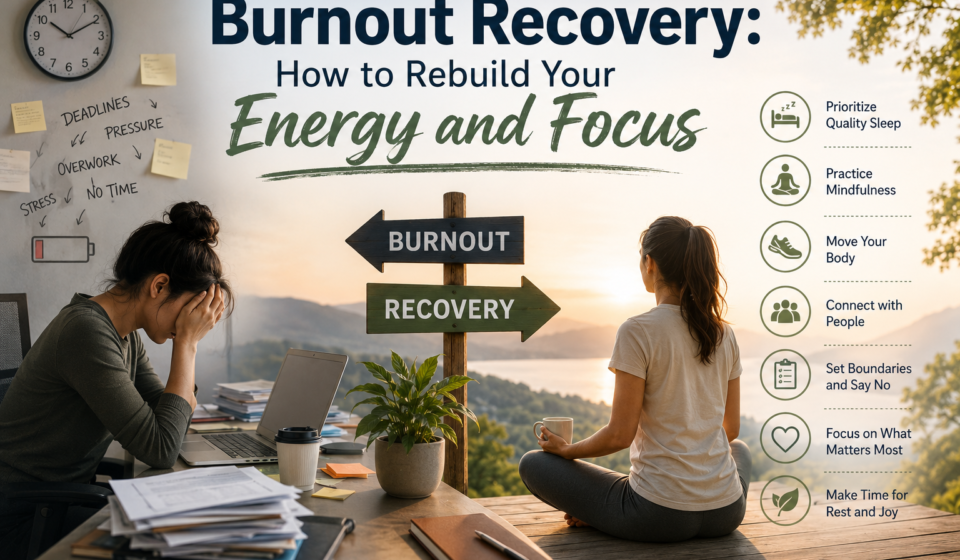

Burnout Recovery: How to Rebuild Your Energy and Focus – In today’s fast-paced world, burnout has become one of the most common challenges affecting professionals, students, entrepreneurs, caregivers, and even remote workers. Long hours, constant digital connectivity, high expectations, and ongoing stress can gradually drain both mental and physical resources. What begins as temporary fatigue can eventually develop into burnout—a state of emotional, physical, and mental exhaustion caused by prolonged stress.
Burnout is more than simply feeling tired after a busy week. It can leave people feeling detached, unmotivated, overwhelmed, and unable to perform at their usual level. Fortunately, recovery is possible. With the right strategies and mindset, you can rebuild your energy, restore your focus, and regain a sense of balance in your life.
What Is Burnout?
Burnout is often associated with chronic workplace stress, but it can affect anyone facing prolonged pressure without adequate recovery. Common signs include persistent exhaustion, reduced motivation, difficulty concentrating, increased irritability, cynicism, and declining performance. Experts emphasize that burnout develops over time when stress continues without sufficient opportunities for rest and recovery.
Unlike ordinary tiredness, burnout does not disappear after a single night of sleep or a relaxing weekend. It often requires intentional changes to daily habits, workload management, and overall lifestyle.
Recognizing the Warning Signs
The first step toward recovery is recognizing that burnout is happening. Many people ignore the symptoms because they believe they simply need to work harder or push through the discomfort.
Some common warning signs include:
- Constant physical and mental fatigue
- Difficulty focusing on tasks
- Loss of motivation and enthusiasm
- Feeling emotionally numb
- Increased anxiety or frustration
- Sleep disturbances
- Reduced productivity
- Feeling disconnected from work or personal relationships
When these symptoms persist for weeks or months, they may indicate burnout rather than temporary stress. Early recognition can prevent the condition from becoming more severe.
Why Recovery Matters
Many people try to solve burnout by taking a short vacation or a few days off. While rest is helpful, research suggests that true burnout recovery requires rebuilding depleted mental, emotional, and physical resources rather than simply taking a break.
Ignoring burnout can lead to long-term consequences, including chronic stress, reduced job satisfaction, strained relationships, and declining overall well-being. Recovery is an investment in your future health, productivity, and happiness.
Step 1: Accept That You Need Recovery
One of the biggest obstacles to recovery is denial. High achievers often struggle to admit that they are overwhelmed because they view exhaustion as a sign of weakness.
In reality, acknowledging burnout is a sign of self-awareness and strength. Recovery begins when you accept that your current approach is unsustainable and that change is necessary.
Ask yourself:
- What is draining my energy most?
- Which responsibilities feel overwhelming?
- What activities leave me feeling refreshed?
- What needs to change for me to feel healthier?
Honest answers can help identify the root causes of burnout.
Step 2: Create Distance From Stressors
A critical part of recovery involves reducing exposure to the sources of chronic stress whenever possible. This does not necessarily mean quitting your job or making drastic life changes.
Instead, consider practical adjustments such as:
- Taking vacation days
- Delegating responsibilities
- Reducing unnecessary commitments
- Limiting overtime work
- Setting clearer boundaries with colleagues
Even small changes can create valuable mental space for recovery. Experts note that creating distance from stressors helps interrupt the cycle of chronic exhaustion.
Step 3: Prioritize Sleep and Physical Health
Burnout often disrupts sleep patterns, which can make recovery even more difficult. Lack of sleep affects concentration, emotional regulation, and energy levels.
To support recovery:
- Aim for 7–9 hours of sleep each night
- Maintain a consistent sleep schedule
- Reduce screen time before bed
- Limit caffeine late in the day
- Create a relaxing bedtime routine
Physical activity is equally important. Regular exercise improves mood, reduces stress hormones, and increases energy. Even a 20-minute walk can provide meaningful benefits.
Nutrition also plays a role. Fueling your body with balanced meals can help stabilize energy levels and support overall well-being.
Step 4: Rebuild Boundaries
One of the most common causes of burnout is poor boundaries between work and personal life. Technology has made it possible to stay connected 24 hours a day, but constant availability comes at a cost.
Consider implementing boundaries such as:
- Turning off work notifications after hours
- Avoiding emails during personal time
- Scheduling regular breaks
- Protecting weekends from unnecessary work
- Learning to say no to nonessential commitments
Healthy boundaries create opportunities for recovery and help prevent future burnout. Research consistently shows that recovery during nonwork time is strongly linked to improved well-being and reduced exhaustion.
Step 5: Practice Active Recovery
Recovery is not simply doing nothing. Effective recovery often involves activities that restore energy and promote psychological detachment from stress.
Examples include:
- Spending time in nature
- Reading for pleasure
- Exercising
- Practicing mindfulness
- Engaging in creative hobbies
- Listening to music
- Spending quality time with friends and family
Researchers describe these activities as proactive recovery strategies because they actively replenish mental and emotional resources.
The key is choosing activities that genuinely help you recharge rather than those that feel like additional obligations.
Step 6: Strengthen Social Connections
Burnout often causes people to withdraw from others. However, supportive relationships can play a crucial role in recovery.
Talking with trusted friends, family members, mentors, or colleagues can provide emotional support and valuable perspective. Social connection helps reduce feelings of isolation and reminds us that we do not have to face challenges alone.
Research and real-world recovery programs suggest that community support can significantly improve resilience and emotional well-being.
Even simple activities such as sharing a meal, joining a club, or participating in community events can make a meaningful difference.
Step 7: Reevaluate Priorities
Burnout is often a signal that something in your life is out of alignment. Recovery provides an opportunity to reassess your priorities and determine what truly matters.
Consider questions such as:
- Am I spending time on what is most important?
- Are my goals realistic and sustainable?
- What activities bring meaning and satisfaction?
- Which commitments can I reduce or eliminate?
Many people discover that recovery requires not only rest but also a shift in how they approach work, success, and personal fulfillment.
Step 8: Seek Professional Support
Sometimes burnout becomes severe enough that professional help is necessary. A therapist, counselor, or healthcare professional can help identify underlying issues and develop personalized recovery strategies.
Professional support may be especially valuable if burnout is accompanied by symptoms of anxiety, depression, or chronic stress. Experts recommend seeking help when symptoms significantly affect daily functioning or do not improve with self-care efforts.
There is no shame in asking for assistance. Seeking support is often one of the most effective steps toward recovery.
Preventing Future Burnout
Recovery is important, but prevention is equally valuable. Once your energy begins to return, focus on building sustainable habits that protect your well-being.
These habits may include:
- Maintaining healthy boundaries
- Scheduling regular recovery time
- Exercising consistently
- Prioritizing sleep
- Managing workload realistically
- Practicing mindfulness
- Staying connected with supportive people
- Taking breaks before exhaustion becomes severe
Small daily habits can prevent stress from accumulating into chronic burnout.
Conclusion
Burnout recovery is not a quick fix. It is a gradual process of restoring the physical, mental, and emotional resources that prolonged stress has depleted. While the journey may take time, meaningful recovery is possible.
By recognizing the warning signs, creating healthier boundaries, prioritizing rest, strengthening relationships, and seeking support when needed, you can rebuild your energy and focus. Most importantly, burnout recovery offers an opportunity to create a more sustainable and fulfilling way of living—one where success is balanced with well-being.
The goal is not simply to return to the way things were before burnout. The goal is to emerge stronger, healthier, and better equipped to thrive in the future.
