
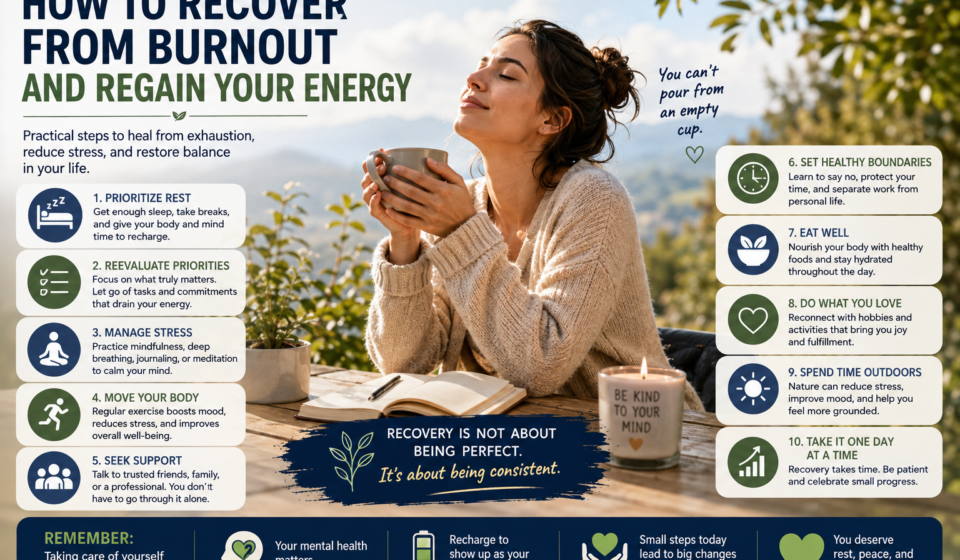

How to Recover from Burnout and Regain Your Energy – In today’s fast-paced world, feeling tired after a busy week is normal. However, when exhaustion becomes constant, motivation disappears, and even simple tasks feel overwhelming, you may be experiencing burnout. Burnout has become increasingly common among professionals, students, caregivers, entrepreneurs, and remote workers who face ongoing stress without adequate recovery.
Burnout is more than simply feeling tired. It is a state of emotional, physical, and mental exhaustion caused by prolonged stress. Left unaddressed, burnout can affect productivity, relationships, physical health, and overall quality of life. The good news is that recovery is possible. By recognizing the signs early and taking intentional steps toward healing, you can regain your energy, restore balance, and improve your well-being.
This guide explores what burnout is, its warning signs, and practical strategies to help you recover and feel like yourself again.
What Is Burnout?
Burnout is a condition that develops when chronic stress overwhelms your ability to cope. Unlike ordinary fatigue, burnout affects multiple areas of life, including your emotions, motivation, and physical health.
People experiencing burnout often feel emotionally drained, detached from their work or responsibilities, and unable to perform at their usual level. Burnout can occur in any area of life, including careers, education, parenting, caregiving, and even personal relationships.
While burnout is often associated with workplace stress, it can develop whenever ongoing demands exceed available resources and recovery time.
Common Signs of Burnout
Recognizing burnout is the first step toward recovery. Common symptoms include:
Physical Symptoms
- Persistent fatigue
- Frequent headaches
- Muscle tension
- Sleep disturbances
- Reduced immunity
- Digestive issues
Emotional Symptoms
- Irritability
- Anxiety
- Feeling overwhelmed
- Loss of motivation
- Hopelessness
- Emotional numbness
Behavioral Symptoms
- Procrastination
- Reduced productivity
- Increased absenteeism
- Social withdrawal
- Difficulty concentrating
- Loss of interest in activities
If these symptoms persist for weeks or months, burnout may be affecting your overall health and well-being.
Why Burnout Happens
Burnout rarely develops overnight. It is usually the result of prolonged exposure to stress without sufficient recovery.
Common causes include:
Excessive Workload
Constant deadlines, long hours, and unrealistic expectations can gradually drain physical and emotional resources.
Lack of Control
Feeling powerless over your schedule, responsibilities, or decisions can contribute significantly to burnout.
Poor Work-Life Balance
When work consistently spills into personal time, recovery becomes difficult.
Perfectionism
People who set extremely high standards for themselves often push beyond healthy limits and struggle to rest.
Lack of Support
Limited support from colleagues, family members, or friends can make stressful situations feel even more overwhelming.
Understanding the factors contributing to burnout can help identify areas where change is needed.
Step 1: Acknowledge the Problem
Many people attempt to push through burnout by working harder. Unfortunately, this often makes symptoms worse.
Recovery begins with acknowledging that burnout exists. Accepting your current state is not a sign of weakness. It is an important step toward making meaningful changes.
Ask yourself:
- Have I been feeling exhausted for weeks or months?
- Do I feel emotionally detached from my responsibilities?
- Have I lost motivation for things I once enjoyed?
- Am I struggling to recover even after rest?
Honest self-reflection can provide valuable insight into your current condition.
Step 2: Prioritize Rest and Recovery
One of the most important aspects of burnout recovery is allowing your body and mind to rest.
Improve Sleep Quality
Sleep is essential for physical and mental restoration.
To improve sleep:
- Maintain a consistent sleep schedule
- Limit screen time before bed
- Create a relaxing bedtime routine
- Reduce caffeine intake later in the day
- Keep your sleeping environment comfortable
Quality sleep helps regulate stress hormones and improves emotional resilience.
Take Real Breaks
Many people take breaks while still checking emails or thinking about work. Effective recovery requires genuine mental disengagement.
Consider:
- Taking short walks
- Spending time in nature
- Practicing mindfulness
- Reading for enjoyment
- Engaging in hobbies
These activities allow the nervous system to recover from chronic stress.
Step 3: Reevaluate Your Priorities
Burnout often develops when too much energy is spent on obligations while personal needs are ignored.
Take time to evaluate:
- What responsibilities are truly essential?
- Which commitments can be reduced or eliminated?
- What activities bring fulfillment and joy?
Learning to say “no” to unnecessary demands can create space for recovery and prevent future burnout.
Step 4: Establish Healthy Boundaries
Poor boundaries are a common contributor to burnout.
Healthy boundaries might include:
- Ending work at a specific time each day
- Avoiding work-related communication during personal time
- Limiting overtime
- Protecting time for rest and family
Setting boundaries can initially feel uncomfortable, especially for people accustomed to always being available. However, boundaries are essential for long-term well-being.
Step 5: Focus on Physical Health
Physical health plays a major role in burnout recovery.
Exercise Regularly
Physical activity helps reduce stress and improve mood.
You don’t need intense workouts to benefit. Simple activities such as:
- Walking
- Cycling
- Swimming
- Yoga
- Stretching
can significantly improve energy levels and emotional health.
Eat Nutritious Foods
Chronic stress can lead to poor eating habits.
Aim to include:
- Fruits and vegetables
- Lean proteins
- Whole grains
- Healthy fats
- Adequate hydration
Balanced nutrition provides the energy needed for recovery.
Step 6: Reconnect With Activities You Enjoy
Burnout often causes people to abandon hobbies and interests.
Reintroducing enjoyable activities can help restore emotional balance.
Examples include:
- Listening to music
- Painting or drawing
- Gardening
- Cooking
- Playing sports
- Spending time outdoors
These activities help create positive experiences that counteract stress and exhaustion.
Step 7: Strengthen Social Connections
Burnout frequently leads to isolation, which can worsen symptoms.
Connecting with supportive people can provide emotional relief and perspective.
Consider:
- Talking with trusted friends
- Spending time with family
- Joining support groups
- Participating in community activities
Human connection plays a powerful role in mental and emotional recovery.
Step 8: Practice Stress Management Techniques
Managing stress effectively can prevent burnout from returning.
Helpful techniques include:
Mindfulness Meditation
Mindfulness encourages awareness of the present moment and reduces rumination.
Deep Breathing Exercises
Slow breathing can calm the body’s stress response and promote relaxation.
Journaling
Writing about thoughts and emotions can improve self-awareness and reduce mental overload.
Gratitude Practice
Focusing on positive experiences can improve emotional well-being and resilience.
Even a few minutes of daily stress management can make a meaningful difference.
Step 9: Seek Professional Support
If burnout symptoms are severe or persist despite lifestyle changes, professional support may be beneficial.
A mental health professional can help you:
- Identify stress triggers
- Develop coping strategies
- Address anxiety or depression
- Improve work-life balance
- Build healthier habits
Therapy provides a safe environment to explore challenges and create sustainable solutions.
Preventing Burnout in the Future
Recovery is important, but prevention is equally valuable.
To reduce the risk of future burnout:
- Schedule regular breaks
- Take vacations when possible
- Maintain healthy boundaries
- Prioritize sleep
- Stay physically active
- Build a support network
- Monitor stress levels regularly
Burnout prevention requires ongoing attention rather than occasional self-care.
Final Thoughts
Burnout can leave you feeling physically exhausted, emotionally drained, and disconnected from the things that matter most. While recovery may take time, it is entirely possible to regain your energy and rebuild a healthier, more balanced life.
The key is recognizing the signs early, prioritizing rest, setting boundaries, improving physical health, and seeking support when needed. Small, consistent changes often have the greatest impact over time.
Remember that recovery is not about becoming more productive as quickly as possible. It is about restoring your well-being, protecting your mental health, and creating a lifestyle that allows you to thrive rather than simply survive. With patience and intentional effort, you can overcome burnout and move forward with renewed energy, clarity, and resilience.