
Depression Symptoms Early Signs and When to Get Help – Depression is one of the most common mental health conditions worldwide, affecting millions of people every year. While everyone experiences sadness, disappointment, or emotional struggles from time to time, depression goes beyond temporary feelings. It can affect how a person thinks, feels, and functions in daily life.
Recognizing Depression Symptoms early is important because timely support and treatment can significantly improve outcomes. Unfortunately, many people ignore warning signs or assume they will disappear on their own. Understanding the early indicators of depression can help individuals seek help before symptoms become more severe.
This article explores the most common Depression Symptoms, the factors that contribute to depression, and when it may be time to seek professional support.
What Is Depression?
Depression, also known as major depressive disorder, is a mental health condition characterized by persistent feelings of sadness, hopelessness, and a loss of interest in activities that were once enjoyable.
Unlike normal emotional ups and downs, depression often lasts for weeks, months, or even longer. It can interfere with work, school, relationships, physical health, and overall quality of life.
Depression affects people differently. Some individuals experience severe emotional symptoms, while others notice physical changes before realizing they are struggling with their mental health.
Because depression can develop gradually, recognizing Depression Symptoms early can be challenging.
Why Early Recognition Matters
Many people wait until depression significantly affects their daily life before seeking help.
Early identification of Depression Symptoms can:
- Improve treatment outcomes
- Prevent symptoms from worsening
- Reduce the risk of long-term complications
- Support healthier relationships
- Improve overall wellbeing
- Help individuals return to normal activities sooner
The sooner depression is recognized, the sooner effective treatment and support can begin.
Common Depression Symptoms
Depression affects emotional, cognitive, behavioral, and physical health.
Understanding these signs can help individuals recognize when they may need additional support.
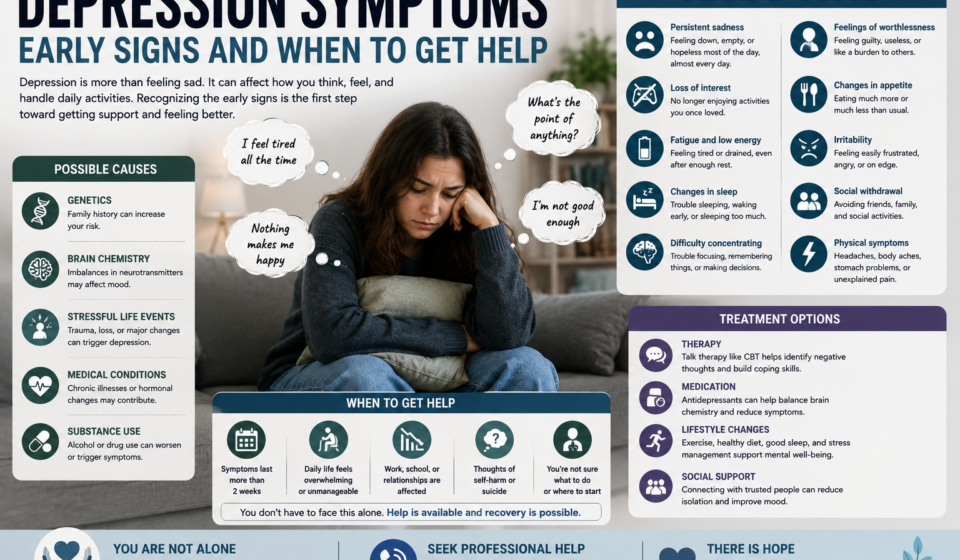
Persistent Sadness
One of the most recognizable Depression Symptoms is a persistent feeling of sadness.
Unlike temporary sadness that improves over time, depression-related sadness often remains for most of the day and continues for weeks or longer.
People may describe feeling:
- Empty
- Down
- Hopeless
- Emotionally numb
- Tearful without a clear reason
Persistent sadness should not be ignored, especially when it affects daily functioning.
Loss of Interest in Activities
A loss of interest or pleasure in activities once enjoyed is another common sign of depression.
Individuals may stop enjoying:
- Hobbies
- Sports
- Social events
- Entertainment
- Family activities
This symptom, often called anhedonia, is one of the key Depression Symptoms used by mental health professionals when evaluating depression.
Fatigue and Low Energy
Many people with depression experience ongoing exhaustion.
Even simple tasks may feel overwhelming.
Common experiences include:
- Difficulty getting out of bed
- Feeling tired throughout the day
- Reduced motivation
- Lack of physical energy
These Depression Symptoms can make work, school, and daily responsibilities much more difficult.
Changes in Sleep Patterns
Sleep disturbances are frequently associated with depression.
Some individuals experience insomnia, including:
- Difficulty falling asleep
- Frequent waking during the night
- Early morning awakening
Others may sleep excessively yet still feel tired.
Changes in sleep are among the most common Depression Symptoms and can significantly affect emotional wellbeing.
Difficulty Concentrating
Depression often affects cognitive functioning.
People may notice:
- Trouble focusing
- Poor memory
- Difficulty making decisions
- Reduced productivity
- Mental fog
These Depression Symptoms can impact academic performance, work responsibilities, and everyday tasks.
Feelings of Worthlessness or Guilt
Depression frequently changes how individuals view themselves.
Many people experience:
- Excessive self-criticism
- Feelings of failure
- Guilt about past mistakes
- Low self-esteem
- Beliefs that they are a burden to others
These negative thought patterns can reinforce depression and make recovery more challenging.
Appetite and Weight Changes
Changes in eating habits are common Depression Symptoms.
Some individuals experience:
- Reduced appetite
- Weight loss
- Lack of interest in food
Others may eat more frequently and gain weight.
Significant changes in appetite or weight may indicate an underlying mental health concern.
Irritability and Frustration
Although sadness is often associated with depression, irritability can also be a major symptom.
People may become:
- Easily frustrated
- Short-tempered
- Impatient
- Emotionally reactive
In some cases, irritability may be more noticeable than sadness itself.
Social Withdrawal
Depression often causes individuals to pull away from social interactions.
They may:
- Avoid friends and family
- Decline invitations
- Spend more time alone
- Reduce communication with others
Social withdrawal is one of the Depression Symptoms that can contribute to feelings of loneliness and isolation.
Physical Depression Symptoms
Depression does not only affect emotions.
Many individuals experience physical Depression Symptoms, including:
- Headaches
- Muscle aches
- Digestive issues
- Fatigue
- Reduced energy
- Chronic pain
These symptoms may occur even when no clear medical cause is identified.
The connection between mental and physical health means that emotional distress can often manifest physically.
Risk Factors for Depression
Depression can affect anyone, but certain factors may increase risk.
Family History
Individuals with relatives who have depression may be more likely to develop the condition themselves.
Genetics can influence how people respond to stress and regulate emotions.
Chronic Stress
Long-term stress can increase vulnerability to depression.
Examples include:
- Financial difficulties
- Workplace pressure
- Relationship problems
- Caregiving responsibilities
Chronic stress may contribute to both emotional and physical Depression Symptoms.
Trauma and Loss
Difficult life experiences can increase the risk of depression.
Examples include:
- Bereavement
- Abuse
- Neglect
- Serious illness
- Major life changes
These experiences can have lasting effects on emotional wellbeing.
Physical Health Conditions
Certain medical conditions are associated with higher rates of depression, including:
- Chronic pain
- Heart disease
- Diabetes
- Neurological disorders
Physical and mental health often influence each other in complex ways.
When Depression Symptoms Become Serious
While mild depression can still significantly affect quality of life, some signs require immediate attention.
Warning signs include:
- Severe hopelessness
- Inability to perform daily tasks
- Extreme social withdrawal
- Persistent feelings of worthlessness
- Thoughts of self-harm
- Thoughts of suicide
These Depression Symptoms should never be ignored.
Professional support is essential when symptoms reach this level of severity.
When to Seek Professional Help
Many people wonder when they should seek assistance.
Consider professional support if:
- Symptoms last longer than two weeks
- Daily functioning becomes difficult
- Relationships are affected
- Work or academic performance declines
- Sleep and appetite changes become significant
- Emotional distress feels overwhelming
Mental health professionals can assess symptoms and recommend appropriate treatment options.
Seeking help early often leads to better outcomes.
Treatment Options for Depression
Depression is highly treatable.
Several evidence-based approaches can help reduce Depression Symptoms and improve quality of life.
Psychotherapy
Therapy is one of the most effective treatments for depression.
Approaches such as Cognitive Behavioral Therapy (CBT) help individuals:
- Identify negative thought patterns
- Develop healthier coping strategies
- Improve emotional regulation
- Build resilience
Many people experience significant improvement through therapy.
Medication
For some individuals, antidepressant medications may be recommended.
Medication can help regulate brain chemistry and reduce symptoms.
Treatment decisions should always be made with qualified healthcare professionals.
Lifestyle Changes
Healthy habits can support recovery and improve overall wellbeing.
Examples include:
- Regular exercise
- Balanced nutrition
- Consistent sleep schedules
- Stress management
- Social connection
- Time outdoors
While lifestyle changes may not replace professional treatment, they can complement other interventions.
Social Support
Supportive relationships play an important role in recovery.
Talking with trusted friends, family members, or support groups can reduce feelings of isolation and provide emotional encouragement.
Reducing the Stigma Around Depression
Despite growing awareness, many people still hesitate to discuss depression openly.
Some fear judgment or believe they should simply “push through” their symptoms.
In reality, depression is a legitimate medical condition—not a sign of weakness.
Understanding Depression Symptoms and discussing mental health openly can encourage more people to seek help when needed.
Reducing stigma makes it easier for individuals to access treatment and support.
Protecting Mental Health
Although not all cases of depression can be prevented, certain habits may support emotional wellbeing.
Helpful practices include:
- Maintaining strong social connections
- Managing stress effectively
- Prioritizing sleep
- Staying physically active
- Limiting excessive alcohol use
- Practicing mindfulness
- Seeking support during difficult times
These habits can contribute to greater resilience and improved mental health.
Conclusion
Recognizing Depression Symptoms early is one of the most important steps toward improving mental health and overall wellbeing. Persistent sadness, loss of interest in activities, fatigue, sleep disturbances, concentration problems, social withdrawal, and feelings of worthlessness are all common signs that should not be ignored.
Depression is a common and treatable condition. With the right combination of professional support, healthy lifestyle habits, and social connection, many individuals successfully manage their symptoms and regain a sense of purpose and fulfillment.
If Depression Symptoms are affecting your daily life or have persisted for more than a few weeks, seeking professional guidance can be an important step toward recovery. Early intervention can make a significant difference and help individuals move toward a healthier and more hopeful future.