
How Doomscrolling Is Damaging Mental Health in 2026 – In an age where information is available instantly and endlessly, staying informed has never been easier. Yet this constant access to news and social media has created a new challenge for mental health: doomscrolling. The term refers to the habit of continuously scrolling through negative news, alarming headlines, and distressing social media content, often for long periods of time.
While many people begin scrolling with the intention of staying informed, doomscrolling can quickly become an unhealthy habit. In 2026, as artificial intelligence, personalized algorithms, and 24-hour digital connectivity continue to shape online experiences, doomscrolling has become a growing concern among mental health professionals.
Understanding how doomscrolling affects mental health is the first step toward developing healthier digital habits and protecting emotional wellbeing.
What Is Doomscrolling?
Doomscrolling is the tendency to repeatedly consume negative or upsetting information online, even when doing so causes stress or anxiety.
Common examples include:
- Reading endless news about global crises
- Constantly checking updates about economic uncertainty
- Following negative social media discussions
- Watching distressing videos for extended periods
- Refreshing news feeds repeatedly throughout the day
Many people recognize that the content is making them feel worse, yet they continue scrolling. This behavior often becomes automatic and difficult to stop.
Why Doomscrolling Has Become More Common
Several factors have contributed to the rise of doomscrolling in recent years.
1. Constant Access to Information
Smartphones make it possible to access news and social media at any moment. Unlike previous generations, people no longer wait for newspapers or evening broadcasts.
Notifications, alerts, and personalized feeds create a constant stream of information that encourages frequent checking.
2. Algorithm-Driven Content
Social media platforms and news websites use algorithms designed to maximize engagement. Unfortunately, negative and emotionally charged content often attracts more attention than positive stories.
As users interact with concerning news, platforms may show even more similar content, creating a cycle that reinforces doomscrolling.
3. Human Survival Instincts
From an evolutionary perspective, humans are naturally wired to pay attention to threats.
Thousands of years ago, recognizing danger helped people survive. Today, this same tendency can cause individuals to focus heavily on negative information, even when it is not directly affecting their daily lives.
The Psychological Effects of Doomscrolling
While staying informed can be beneficial, excessive exposure to negative information can have significant psychological consequences.
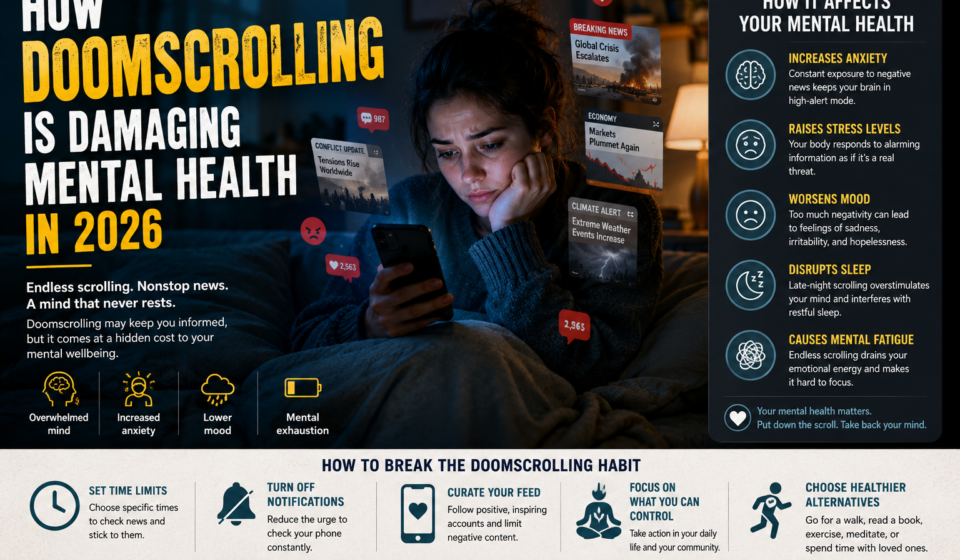
Increased Anxiety
One of the most common effects of doomscrolling is heightened anxiety.
Constant exposure to alarming headlines can create the impression that the world is more dangerous than it actually is. As a result, individuals may experience:
- Excessive worry
- Nervousness
- Racing thoughts
- Difficulty relaxing
Over time, this state of constant alertness can become emotionally exhausting.
Higher Stress Levels
Reading about crises, disasters, conflicts, and uncertainty activates the body’s stress response.
The brain often reacts to negative information as though it represents an immediate threat, releasing stress hormones such as cortisol.
When doomscrolling becomes a daily habit, stress levels may remain elevated for extended periods, affecting both mental and physical health.
Feelings of Helplessness
Many news events are beyond an individual’s control.
Repeated exposure to large-scale problems can create feelings of helplessness and powerlessness. People may begin to believe that their actions do not matter, which can negatively impact motivation and emotional wellbeing.
Negative Mood Changes
Doomscrolling often contributes to:
- Irritability
- Frustration
- Sadness
- Emotional exhaustion
- Reduced optimism
The longer individuals remain immersed in negative content, the more likely these emotional effects become.
How Doomscrolling Affects Mental Health
The impact of doomscrolling extends beyond temporary stress.
Anxiety Disorders
For people who are already prone to anxiety, doomscrolling can worsen symptoms significantly.
Continuous exposure to frightening information may reinforce catastrophic thinking patterns and increase fears about the future.
Individuals with health anxiety, generalized anxiety, or panic disorders may be particularly vulnerable.
Depression Symptoms
Doomscrolling can also contribute to feelings associated with depression.
When people focus primarily on negative information, they may begin to develop a pessimistic outlook on life. This can lead to:
- Hopelessness
- Reduced motivation
- Emotional numbness
- Loss of interest in enjoyable activities
Although doomscrolling does not directly cause depression, it can intensify existing symptoms and make recovery more difficult.
Emotional Exhaustion
Constant exposure to distressing content requires emotional energy.
Eventually, individuals may feel mentally drained, overwhelmed, and unable to process additional information. This emotional exhaustion can affect productivity, relationships, and overall quality of life.
The Impact on Sleep
Many people engage in doomscrolling late at night.
Unfortunately, this habit can interfere with healthy sleep patterns in several ways.
Increased Mental Stimulation
Reading alarming news before bed can make it difficult for the mind to relax.
Instead of preparing for sleep, the brain remains focused on potential threats and unresolved concerns.
Elevated Anxiety Before Bed
Nighttime doomscrolling often increases worry and rumination, making it harder to fall asleep.
Individuals may find themselves lying awake replaying negative information or imagining worst-case scenarios.
Poor Sleep Quality
Even when sleep occurs, elevated stress levels can affect sleep quality and recovery.
Poor sleep then contributes to increased anxiety and emotional vulnerability the following day, creating a vicious cycle.
Social Media and Doomscrolling
Social media platforms play a significant role in modern doomscrolling behavior.
Unlike traditional news sources, social media combines:
- Breaking news
- Personal opinions
- Emotional reactions
- Viral content
- Constant updates
This combination can create an overwhelming information environment.
Additionally, people often encounter dramatic headlines without important context, increasing confusion and emotional distress.
The endless scrolling design used by many platforms further encourages prolonged engagement.
Why Doomscrolling Feels Addictive
Many people wonder why they continue doomscrolling even when it makes them feel worse.
Several psychological mechanisms contribute to this behavior.
Seeking Certainty
People often believe that more information will reduce uncertainty.
Ironically, consuming excessive news often creates even more questions and concerns.
Variable Rewards
Occasionally, users encounter positive updates or useful information while scrolling.
These unpredictable rewards encourage continued engagement, similar to other habit-forming digital behaviors.
Fear of Missing Out
Many individuals worry that they will miss important information if they stop checking updates.
This fear can lead to compulsive monitoring of news and social media feeds.
How to Break the Doomscrolling Habit
Fortunately, there are effective ways to reduce doomscrolling and protect mental health.
Set Time Limits
Allocate specific periods for checking news and social media rather than scrolling continuously throughout the day.
For example:
- Morning update: 15 minutes
- Afternoon update: 15 minutes
- Evening update: 15 minutes
Structured information consumption helps prevent excessive exposure.
Turn Off Nonessential Notifications
Constant alerts encourage impulsive checking behavior.
Disabling unnecessary notifications can reduce the urge to monitor updates constantly.
Curate Your Digital Environment
Consider:
- Unfollowing negative accounts
- Following reputable news sources
- Adding positive and educational content
- Limiting exposure to sensational headlines
A healthier digital environment supports better emotional wellbeing.
Replace Scrolling With Healthy Activities
When the urge to doomscroll appears, try alternative activities such as:
- Taking a walk
- Reading a book
- Exercising
- Practicing mindfulness
- Talking with friends
- Spending time outdoors
These activities help reduce stress while supporting mental health.
Focus on What You Can Control
Many global events are beyond individual influence.
Instead of becoming consumed by uncertainty, focus on actions within your control:
- Your health
- Your habits
- Your relationships
- Your community involvement
Taking constructive action often reduces feelings of helplessness.
Building Healthier Digital Habits in 2026
Technology is likely to remain an important part of everyday life. The goal is not to avoid information entirely but to engage with it more intentionally.
Healthy digital habits include:
- Consuming news in moderation
- Prioritizing reliable sources
- Taking regular screen breaks
- Practicing mindfulness
- Protecting sleep quality
- Maintaining offline activities and relationships
These habits help create a healthier balance between staying informed and protecting emotional wellbeing.
Conclusion
Doomscrolling has emerged as one of the most significant digital-age challenges affecting mental health in 2026. While staying informed is important, excessive exposure to negative news and social media content can increase anxiety, elevate stress, disrupt sleep, and contribute to emotional exhaustion.
The good news is that doomscrolling is a habit that can be changed. By setting boundaries around information consumption, curating digital environments, and prioritizing healthy offline activities, individuals can regain control over their attention and emotional wellbeing.
In a world filled with constant information, protecting mental health requires intentional choices. Staying informed is valuable, but maintaining balance is essential. By reducing doomscrolling and adopting healthier digital habits, people can support their mental health while remaining connected to the world around them.