
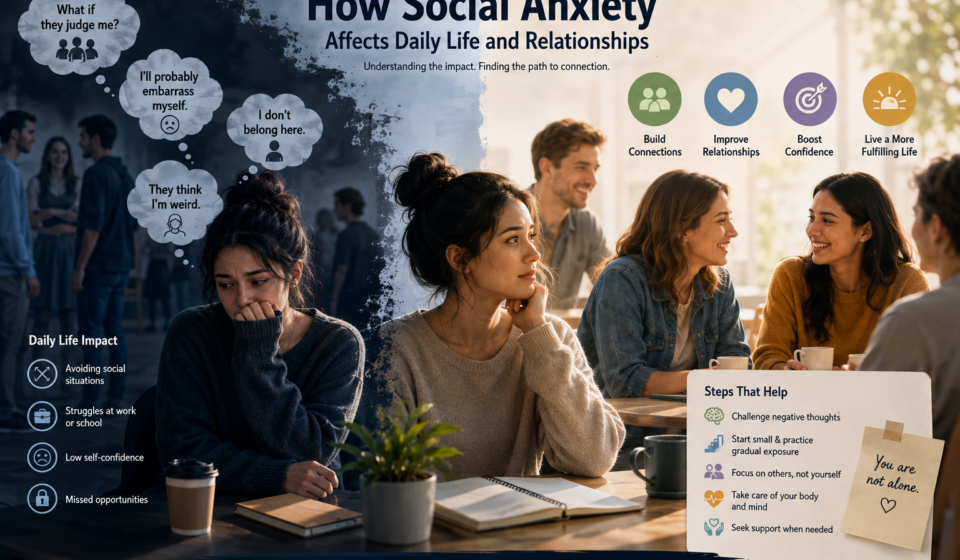

How Social Anxiety Affects Daily Life and Relationships – Social anxiety is more than occasional nervousness before a presentation or a first date. For millions of people worldwide, it is a persistent fear of being judged, embarrassed, or negatively evaluated in social situations. This fear can become so overwhelming that it interferes with everyday activities, professional opportunities, and personal relationships.
While many people experience shyness from time to time, social anxiety goes much deeper. It can affect how individuals interact with others, make decisions, and navigate daily life. Understanding how social anxiety influences both personal well-being and relationships is an important step toward recognizing the condition and finding effective ways to manage it.
What Is Social Anxiety?
Social anxiety, often referred to as Social Anxiety Disorder (SAD), is a mental health condition characterized by intense fear or anxiety in social situations. People with social anxiety often worry about being judged, criticized, rejected, or embarrassed by others.
These fears may arise in situations such as:
- Meeting new people
- Speaking in public
- Attending social events
- Participating in group discussions
- Making phone calls
- Eating or drinking in public
- Talking to authority figures
While the severity varies from person to person, the condition can significantly affect daily functioning when left unaddressed.
Common Symptoms of Social Anxiety
Social anxiety can produce both emotional and physical symptoms.
Emotional Symptoms
- Intense fear of social situations
- Excessive self-consciousness
- Fear of embarrassment
- Worrying for days or weeks before an event
- Avoidance of social interactions
- Difficulty making eye contact
Physical Symptoms
- Rapid heartbeat
- Sweating
- Trembling
- Blushing
- Nausea
- Shortness of breath
- Muscle tension
- Dizziness
These symptoms can make even simple interactions feel extremely challenging.
The Impact on Daily Life
One of the most significant effects of social anxiety is its influence on everyday activities. Tasks that many people consider routine may feel overwhelming for someone experiencing social anxiety.
Difficulty at Work or School
Professional and academic environments often require communication, collaboration, and public interaction. Individuals with social anxiety may struggle with:
- Speaking during meetings
- Asking questions
- Giving presentations
- Participating in classroom discussions
- Networking opportunities
As a result, talented individuals may avoid situations that could help them advance in their careers or education.
Many people with social anxiety possess valuable skills and knowledge but hesitate to showcase their abilities due to fear of judgment.
Avoidance of Social Situations
Avoidance is one of the most common coping mechanisms associated with social anxiety. While avoiding stressful situations may provide temporary relief, it often strengthens anxiety over time.
Examples of avoidance behaviors include:
- Declining invitations
- Skipping social gatherings
- Avoiding phone calls
- Refusing leadership roles
- Staying silent in group conversations
Over time, these patterns can limit personal growth and reduce opportunities for meaningful experiences.
Reduced Self-Confidence
Constant worry about how others perceive you can gradually undermine self-esteem.
People with social anxiety often:
- Criticize themselves harshly
- Focus on perceived mistakes
- Compare themselves negatively to others
- Doubt their social abilities
This cycle can create a persistent sense of insecurity that affects many aspects of life.
How Social Anxiety Affects Relationships
Relationships thrive on communication, trust, and emotional connection. Social anxiety can make these elements more difficult to develop and maintain.
Challenges in Making New Friends
Building friendships often requires initiating conversations and engaging in social activities. For someone with social anxiety, these interactions can feel intimidating.
Many individuals want meaningful friendships but struggle to:
- Start conversations
- Join social groups
- Attend events
- Express their personality openly
As a result, loneliness can become a common experience despite a strong desire for connection.
Difficulty in Romantic Relationships
Social anxiety can also affect dating and romantic relationships.
Individuals may experience:
- Fear of rejection
- Difficulty expressing feelings
- Anxiety during dates
- Overthinking conversations
- Avoidance of emotional vulnerability
Even after entering a relationship, social anxiety may continue to create challenges. Some individuals constantly worry about saying the wrong thing or disappointing their partner.
This ongoing anxiety can sometimes lead to misunderstandings or emotional distance if not addressed openly.
Impact on Family Relationships
Family members may not always understand the challenges associated with social anxiety.
Some relatives may mistakenly interpret avoidance behaviors as:
- Lack of interest
- Rudeness
- Disrespect
- Laziness
Without proper understanding, this can create tension within families.
Open communication and education about social anxiety can help loved ones provide more effective support.
The Link Between Social Anxiety and Loneliness
One of the most painful consequences of social anxiety is loneliness.
People with social anxiety often desire social connection but fear the interactions needed to create those connections. This contradiction can lead to feelings of isolation.
Loneliness may contribute to:
- Lower self-esteem
- Increased stress
- Depression symptoms
- Reduced life satisfaction
The combination of social anxiety and loneliness can become a self-reinforcing cycle. Anxiety leads to avoidance, avoidance leads to isolation, and isolation often increases anxiety.
Social Anxiety in the Digital Age
Technology has changed how people communicate, creating both opportunities and challenges for individuals with social anxiety.
Benefits of Digital Communication
Many people with social anxiety feel more comfortable communicating through:
- Text messages
- Social media
- Online communities
These platforms provide additional time to think before responding and reduce some of the pressure associated with face-to-face interaction.
Potential Drawbacks
While digital communication can be helpful, excessive reliance on it may limit opportunities to develop real-world social skills.
Additionally, social media can contribute to:
- Constant comparison
- Fear of missing out (FOMO)
- Increased self-consciousness
- Negative self-evaluation
Finding a healthy balance between online and offline interaction is important for long-term well-being.
The Connection Between Social Anxiety and Mental Health
Social anxiety rarely exists in isolation. It often occurs alongside other mental health challenges.
Common related conditions include:
- Generalized anxiety disorder
- Depression
- Panic disorder
- Low self-esteem
- Chronic stress
When social anxiety persists for long periods, the emotional burden can affect overall mental health and quality of life.
Recognizing these connections can help individuals seek comprehensive support rather than focusing solely on individual symptoms.
Strategies for Managing Social Anxiety
Although social anxiety can feel overwhelming, effective strategies are available.
Challenge Negative Thoughts
People with social anxiety often assume the worst about social situations.
For example:
- “Everyone will judge me.”
- “I will embarrass myself.”
- “People think I am awkward.”
Learning to question these assumptions can reduce anxiety and promote more balanced thinking.
Practice Gradual Exposure
Avoidance strengthens anxiety, while gradual exposure helps reduce it.
Start with small challenges such as:
- Greeting a coworker
- Asking a simple question
- Attending a small gathering
- Initiating a brief conversation
Repeated positive experiences can gradually build confidence.
Focus Outward
Social anxiety often causes people to become intensely focused on themselves.
Instead, try directing attention toward:
- The conversation
- The other person’s perspective
- Shared interests
- The surrounding environment
This shift can reduce self-consciousness and make interactions feel more natural.
Develop Healthy Lifestyle Habits
Lifestyle factors can influence anxiety levels.
Helpful habits include:
- Regular exercise
- Quality sleep
- Balanced nutrition
- Mindfulness practices
- Limiting excessive caffeine
Supporting overall well-being can make anxiety easier to manage.
When to Seek Professional Help
Occasional nervousness is a normal part of life. However, professional support may be beneficial when social anxiety:
- Interferes with work or school
- Damages relationships
- Causes significant distress
- Leads to persistent avoidance
- Impacts daily functioning
Mental health professionals can provide evidence-based treatments that help individuals develop coping skills and improve confidence.
Seeking help early can prevent symptoms from becoming more severe and improve long-term outcomes.
Conclusion
Social anxiety affects far more than social interactions. It can influence work performance, educational opportunities, friendships, romantic relationships, family dynamics, and overall quality of life.
The fear of judgment and embarrassment often leads to avoidance, isolation, and reduced self-confidence. Yet despite these challenges, social anxiety is manageable. With self-awareness, supportive relationships, healthy coping strategies, and professional guidance when necessary, individuals can build confidence and develop stronger connections with others.
Understanding how social anxiety affects daily life and relationships is the first step toward creating positive change. By addressing the condition with patience and persistence, people can break the cycle of fear and enjoy more meaningful, fulfilling interactions in every area of life.
