
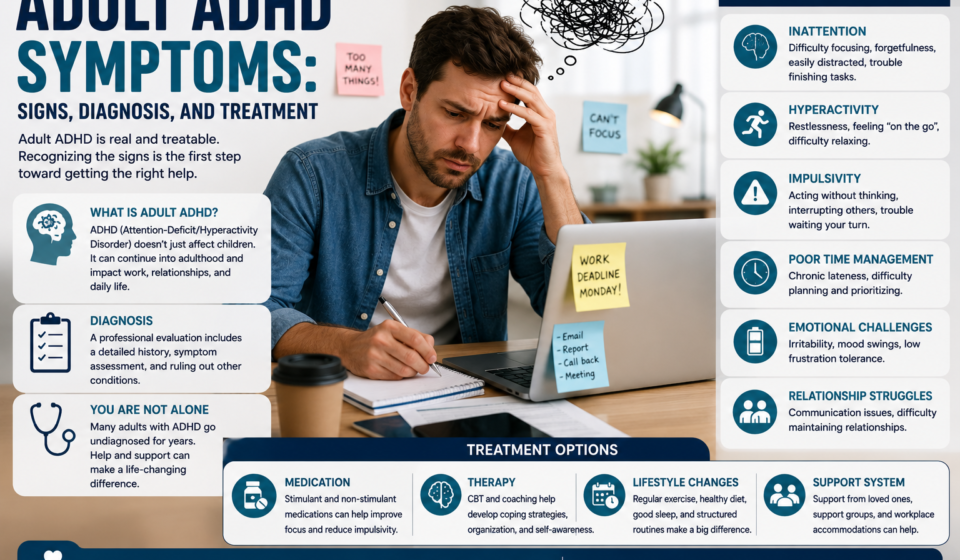

Adult ADHD Symptoms: Signs, Diagnosis, and Treatment – Adult Attention Deficit Hyperactivity Disorder (ADHD) can manifest in a variety of ways, often leading to significant challenges in daily life. The most common symptoms include inattention, hyperactivity, and impulsivity, each impacting personal and professional relationships in distinct manners.
Inattention can present as a persistent difficulty in sustaining focus on tasks. Adults with ADHD may exhibit poor organizational skills, miss deadlines, or overlook details in their work. This often leads to frustration, both for the individual and their colleagues or family members. For instance, a professional may find it challenging to complete reports accurately, resulting in negative feedback from supervisors. This disorganization may stem from an inherent difficulty in prioritizing tasks due to the ADHD-related brain function differences.
Hyperactivity, while perhaps less obvious in adults than children, can still be evident through restlessness or an inability to remain seated in social or work settings. Adults might find themselves talking excessively or interrupting others, potentially leading to strained interactions. This can create misunderstandings, as others may perceive this behavior as rudeness or lack of interest, rather than a symptom of ADHD.
Impulsivity can greatly affect decision-making and relationships. Adults with ADHD may make hasty choices without fully considering the consequences. For example, they might impulsively change jobs, end relationships abruptly, or engage in risky behaviors which could lead to negative life outcomes. Often, this impulsiveness can be misconstrued as irresponsibility or a lack of maturity by peers and family.
Common misconceptions about adult ADHD suggest that it is merely a childhood disorder that fades over time. In reality, many adults with ADHD retain their symptoms into adulthood, adapting in various ways to cope with these challenges. Understanding these symptoms and their effects can lead to more empathetic and supportive interactions, crucial for those navigating the complexities of adult ADHD.
The Diagnostic Process for Adult ADHD
The diagnostic process for adult ADHD is a nuanced and structured approach undertaken by mental health professionals. It typically begins with a comprehensive evaluation, which is crucial in accurately assessing the presence of ADHD symptoms. This evaluation often involves a detailed clinical interview, where individuals discuss their developmental history, current functioning, and any behavioral concerns. The clinician’s role is vital in exploring the onset and duration of symptoms, as well as their impact on various areas of life, including work and relationships.
Criteria for diagnosing adult ADHD is based on guidelines outlined in the Diagnostic and Statistical Manual of Mental Disorders (DSM-5). According to these criteria, an individual must exhibit a persistent pattern of inattention and/or hyperactivity-impulsivity that interferes with functioning or development. To confirm a diagnosis, it is imperative that symptoms were present before the age of 12, and they must lead to significant impairment in everyday functioning.
Despite the structured diagnostic criteria, several challenges can arise during the diagnostic process. One significant challenge is the need to differentiate ADHD from other mental health conditions that present similar symptoms, such as anxiety disorders or depression. Ruling out these possible conditions is essential to ensure that ADHD is accurately identified. Additionally, many adults may not recognize their symptoms as indicative of ADHD, leading to misconceptions and delays in seeking the proper help.
Self-assessment tools can serve as a valuable initial step in the diagnostic process. These questionnaires can help individuals identify potential symptoms and determine whether professional assessment is warranted. Ultimately, seeking the assistance of trained mental health professionals is critical for obtaining an accurate diagnosis and developing an effective treatment plan tailored to the individual’s needs.
Treatment Options for Adult ADHD
Treating adult Attention Deficit Hyperactivity Disorder (ADHD) involves a comprehensive approach that takes into account the unique symptoms and challenges faced by each individual. Treatment options are often categorized into medication and non-medication approaches, both of which play essential roles in managing this condition.
Medications for adult ADHD primarily include stimulant and non-stimulant options. Stimulants, such as amphetamines and methylphenidate, are commonly prescribed and have been shown to be effective in enhancing focus and reducing impulsivity. These medications work by increasing the levels of certain neurotransmitters in the brain, improving attention and behavior. However, stimulants come with potential side effects, including increased heart rate, insomnia, and anxiety, which may lead some individuals to consider non-stimulant alternatives.
Non-stimulant medications, such as atomoxetine and guanfacine, offer a different mechanism of action and may be preferable for those who experience adverse effects with stimulants or for whom stimulants are not effective. While they typically have a slower onset of action, these medications can still provide significant relief from ADHD symptoms.
In addition to pharmacological interventions, non-medication treatments are equally crucial. Behavioral therapy has been shown to help adults with ADHD develop coping strategies, improve organization skills, and manage time effectively. Coaching and support groups can provide accountability and guidance in daily life. Lifestyle changes, including regular exercise, a balanced diet, and adequate sleep, can significantly bolster the effectiveness of all treatment options.
Ultimately, the most effective treatment plan will be tailored to the individual’s specific needs and symptoms, considering both medical and non-medical strategies to provide comprehensive support.
Coping Strategies and Support Systems
Adults with Attention-Deficit/Hyperactivity Disorder (ADHD) often face challenges that can impact their daily lives. However, implementing effective coping strategies can greatly improve their ability to manage symptoms and achieve their goals. One highly beneficial approach is the use of structured time management techniques. Adults can utilize planners or digital apps designed to prioritize tasks and set reminders for important deadlines, thereby enhancing productivity and focus.
Organization plays a pivotal role in coping with ADHD. Simple strategies such as decluttering workspaces, using color-coded labels, and maintaining a consistent filing system can significantly alleviate feelings of overwhelm. Visual aids, like bullet boards, can also serve as useful reminders for the individual to stay on track with appointments and responsibilities.
Stress reduction is another crucial aspect of managing ADHD symptoms. Techniques such as mindfulness meditation, yoga, or even regular physical activity can help increase concentration and decrease impulsivity. Establishing a routine that includes regular breaks can also aid in maintaining focus over extended periods, allowing individuals to recharge mentally.
Support systems are equally of paramount importance for adults with ADHD. The involvement of family members can create a nurturing environment conducive to growth and encouragement. Therapy, particularly cognitive-behavioral therapy (CBT), has been shown to be effective in helping adults develop coping strategies tailored to their unique needs while addressing negative thought patterns.
In addition to professional help, support groups provide a valuable opportunity for individuals to share their experiences and strategies with others who understand their challenges. Real-world testimonials illustrate how participating in these groups fosters a sense of community, reducing feelings of isolation and enhancing one’s ability to cope with ADHD.
This content is sponsored by https://www.ez96live.com/.
