
Chronic Stress: How It Affects Your Mind and Body – Stress is a natural part of life. In small doses, it can help people stay alert, meet deadlines, and respond to challenges. However, when stress becomes constant and prolonged, it can begin to take a serious toll on both mental and physical health. This condition is known as chronic stress.
Unlike short-term stress that resolves after a challenge passes, chronic stress persists for weeks, months, or even years. It keeps the body in a prolonged state of alertness, which can gradually wear down multiple systems and increase the risk of various health problems. In today’s fast-paced world, chronic stress has become increasingly common due to demanding work environments, financial pressures, family responsibilities, health concerns, and the constant flow of information through digital devices.
Understanding how chronic stress affects the mind and body is essential for protecting overall well-being. By recognizing its warning signs and learning effective coping strategies, individuals can reduce its impact and improve their quality of life.
What Is Chronic Stress?
Chronic stress occurs when a person experiences ongoing pressure or anxiety without sufficient opportunities for recovery. While the body’s stress response is designed to handle temporary threats, it is not meant to remain activated indefinitely.
When faced with a stressful situation, the brain signals the release of stress hormones such as cortisol and adrenaline. These hormones prepare the body for action by increasing heart rate, blood pressure, and energy levels.
In short-term situations, this response is beneficial. Once the threat passes, hormone levels return to normal. However, when stress becomes chronic, the body remains in a constant state of activation, leading to long-term physical and psychological consequences.
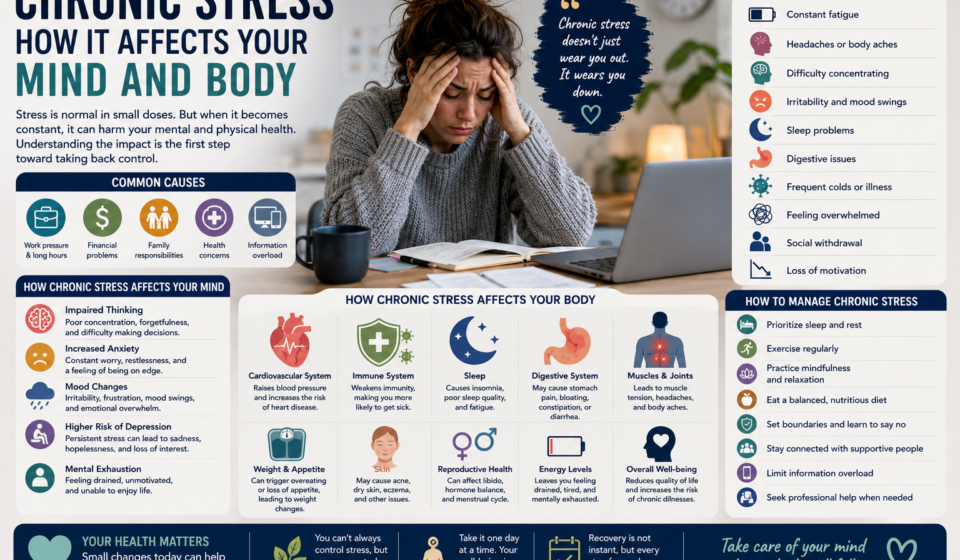
Common Causes of Chronic Stress
Chronic stress can develop from many different situations.
Workplace Pressure
Long hours, heavy workloads, job insecurity, and unrealistic expectations can contribute significantly to ongoing stress.
Financial Difficulties
Debt, rising living costs, and financial uncertainty often create persistent worry and emotional strain.
Family Responsibilities
Parenting challenges, caregiving duties, and relationship conflicts can become ongoing sources of stress.
Health Problems
Managing chronic illness or caring for a loved one with health issues can place significant emotional demands on individuals.
Major Life Changes
Divorce, relocation, grief, career changes, and other major transitions can trigger prolonged stress responses.
Information Overload
Constant exposure to news, social media, emails, and digital notifications can make it difficult for the mind to relax and recover.
While the causes vary from person to person, the effects of chronic stress are often remarkably similar.
How Chronic Stress Affects the Brain
The brain is one of the primary organs affected by prolonged stress.
Impaired Memory and Concentration
Chronic stress can interfere with cognitive function, making it harder to focus, learn new information, and retain memories.
Many people experiencing chronic stress report:
- Forgetfulness
- Brain fog
- Difficulty concentrating
- Reduced productivity
- Trouble making decisions
When the brain is constantly focused on managing stress, fewer resources remain available for other cognitive tasks.
Increased Anxiety
Persistent stress keeps the nervous system in a heightened state of alertness.
This can lead to:
- Excessive worrying
- Restlessness
- Racing thoughts
- Difficulty relaxing
- Increased sensitivity to stressors
Over time, chronic stress may contribute to the development of anxiety disorders in vulnerable individuals.
Mood Changes
Stress affects neurotransmitters that regulate mood and emotional well-being.
Common emotional effects include:
- Irritability
- Frustration
- Mood swings
- Emotional exhaustion
- Feelings of overwhelm
Small inconveniences may feel much more significant when stress levels remain consistently high.
Chronic Stress and Depression
One of the most concerning mental health consequences of chronic stress is its association with depression.
Long-term stress can contribute to:
- Persistent sadness
- Hopelessness
- Loss of motivation
- Fatigue
- Social withdrawal
- Reduced enjoyment in daily activities
When stress continues without adequate coping mechanisms or support, emotional resources can become depleted, increasing the risk of depressive symptoms.
The relationship between stress and depression is complex, but chronic stress is widely recognized as a major contributing factor.
Effects on the Nervous System
The nervous system plays a central role in the stress response.
Under chronic stress, the sympathetic nervous system remains activated for extended periods. This ongoing activation can make it difficult for the body to return to a relaxed state.
Common symptoms include:
- Muscle tension
- Headaches
- Jaw clenching
- Restlessness
- Difficulty sleeping
Many people feel as though they are constantly “on edge” even when there is no immediate threat present.
Impact on Cardiovascular Health
One of the most significant physical effects of chronic stress involves the cardiovascular system.
Increased Heart Rate
Stress hormones cause the heart to beat faster, preparing the body for action.
Elevated Blood Pressure
Persistent activation of the stress response can lead to long-term increases in blood pressure.
Increased Risk of Heart Disease
Over time, chronic stress may contribute to factors associated with cardiovascular disease, including inflammation and unhealthy lifestyle behaviors.
People experiencing ongoing stress often engage in habits such as poor eating, smoking, or reduced physical activity, further increasing cardiovascular risk.
Chronic Stress and the Immune System
The immune system is designed to protect the body from illness and infection.
Unfortunately, prolonged stress can weaken immune function.
As a result, individuals may experience:
- Frequent colds
- Longer recovery times
- Increased susceptibility to illness
- Greater vulnerability to infections
Stress hormones can suppress immune responses, making it harder for the body to defend itself effectively.
This is one reason many people notice becoming sick during particularly stressful periods of life.
Effects on Sleep
Sleep and stress are closely connected.
Chronic stress often disrupts healthy sleep patterns by making it difficult for the mind and body to relax.
Common sleep-related problems include:
- Difficulty falling asleep
- Frequent awakenings
- Restless sleep
- Early morning waking
- Poor sleep quality
Unfortunately, inadequate sleep can increase stress levels further, creating a cycle that becomes difficult to break.
Since sleep is essential for emotional regulation and physical recovery, addressing sleep problems is an important part of stress management.
Digestive Problems and Chronic Stress
The digestive system is highly sensitive to stress.
Many people experience gastrointestinal symptoms during stressful periods, including:
- Stomach pain
- Nausea
- Indigestion
- Bloating
- Diarrhea
- Constipation
The brain and digestive system communicate through what is often referred to as the gut-brain connection.
When stress affects the nervous system, digestive function can also become disrupted.
Persistent digestive issues may sometimes be linked to ongoing stress rather than solely physical illness.
Weight Changes and Appetite Disruptions
Stress can significantly influence eating behaviors.
Some people experience:
Increased Appetite
Stress may trigger cravings for high-calorie comfort foods, leading to overeating.
Reduced Appetite
Others may lose interest in food and eat less than usual.
These changes can contribute to weight fluctuations and nutritional imbalances over time.
Understanding the relationship between stress and eating habits can help individuals make healthier choices during challenging periods.
Muscle Tension and Physical Pain
Many physical symptoms of stress are related to chronic muscle tension.
Common complaints include:
- Neck pain
- Shoulder tension
- Back pain
- Jaw discomfort
- Tension headaches
Because the body remains prepared for perceived threats, muscles may stay partially contracted for extended periods.
This ongoing tension can cause significant discomfort and reduce overall quality of life.
Behavioral Effects of Chronic Stress
Stress often influences behavior in ways that can worsen health outcomes.
Common behavioral changes include:
- Procrastination
- Social withdrawal
- Reduced productivity
- Increased alcohol consumption
- Emotional eating
- Avoidance behaviors
People under chronic stress may struggle to maintain healthy routines, making recovery more challenging.
Recognizing these behavioral patterns is an important step toward positive change.
Warning Signs You Should Not Ignore
Although stress is common, certain symptoms may indicate that it has become chronic and harmful.
Warning signs include:
- Constant fatigue
- Frequent headaches
- Difficulty concentrating
- Persistent anxiety
- Irritability
- Sleep problems
- Digestive issues
- Frequent illness
- Social withdrawal
- Feelings of hopelessness
If these symptoms persist for several weeks or months, it may be time to seek support and implement stress-management strategies.
How to Manage Chronic Stress
Fortunately, there are many effective ways to reduce stress and improve resilience.
Prioritize Sleep
Aim for consistent, high-quality sleep to support emotional and physical recovery.
Exercise Regularly
Physical activity helps lower stress hormones and improve mood.
Activities such as walking, cycling, swimming, and yoga can be highly beneficial.
Practice Mindfulness
Mindfulness techniques encourage present-moment awareness and reduce mental overload.
Set Healthy Boundaries
Protecting personal time and learning to say no can prevent excessive stress accumulation.
Strengthen Social Connections
Supportive relationships provide emotional comfort and help individuals cope with difficult situations.
Limit Information Overload
Reducing exposure to excessive news and digital distractions can help create mental space for recovery.
Seek Professional Support
Mental health professionals can help individuals develop coping strategies and address the underlying causes of chronic stress.
There is no shame in seeking help when stress becomes overwhelming.
Building Long-Term Resilience
Managing chronic stress is not about eliminating all challenges from life. Instead, it involves building resilience and developing healthy ways to respond to stressors.
Resilience can be strengthened through:
- Self-care practices
- Positive relationships
- Healthy routines
- Emotional awareness
- Problem-solving skills
- Realistic expectations
Over time, these habits can improve both mental and physical well-being.
Final Thoughts
Chronic stress affects far more than emotions. It can influence the brain, nervous system, heart, immune system, digestive health, sleep quality, and overall physical well-being. While occasional stress is a normal part of life, prolonged stress can gradually undermine both mental and physical health if left unchecked.
Recognizing the signs of chronic stress is the first step toward recovery. By prioritizing self-care, improving sleep, staying active, setting healthy boundaries, and seeking support when needed, individuals can reduce the impact of stress and build greater resilience.
Taking action today can protect your health tomorrow. Learning to manage chronic stress effectively is one of the most valuable investments you can make in your long-term well-being.