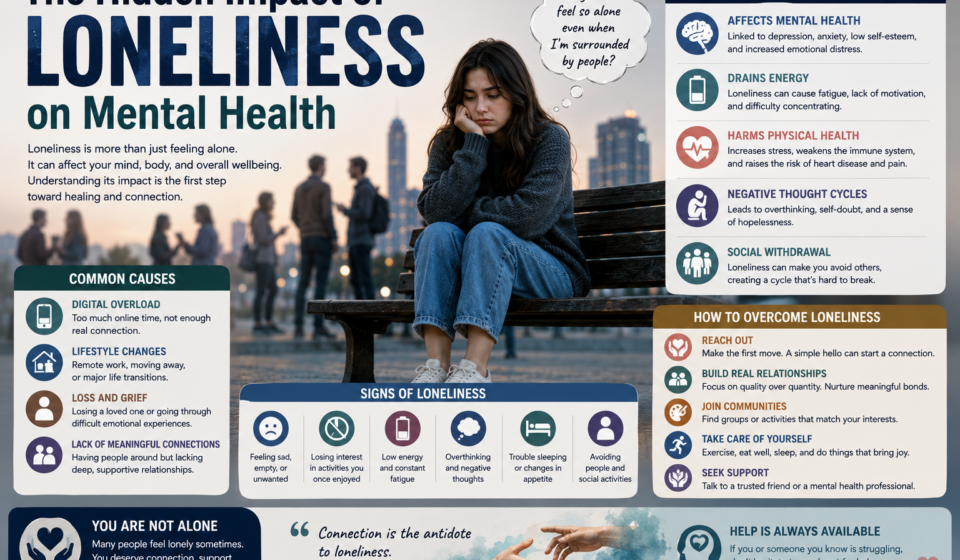

The Hidden Impact of Loneliness on Mental Health – Loneliness is a universal human experience. At some point in life, everyone feels disconnected, isolated, or alone. While temporary loneliness is a normal emotional response to certain situations, chronic loneliness can have serious consequences for mental and physical health.
In today’s hyperconnected world, loneliness has become a growing public health concern. Despite constant access to social media, messaging apps, and digital communication, many people report feeling more isolated than ever. Researchers and mental health professionals increasingly recognize loneliness as a significant factor that can affect emotional wellbeing, cognitive function, and overall quality of life.
The hidden impact of loneliness often develops gradually. Unlike physical illnesses that may present obvious symptoms, loneliness can quietly influence thoughts, emotions, behaviors, and relationships over time. Understanding its effects is essential for protecting mental health and building stronger social connections.
What Is Loneliness?
Loneliness is not simply being alone. Many people enjoy solitude and find it beneficial for relaxation, creativity, and self-reflection.
Loneliness occurs when there is a gap between the social connections a person desires and the relationships they actually experience.
A person can feel lonely while:
- Living with family
- Being in a relationship
- Working in a busy office
- Attending social events
- Having hundreds of social media contacts
Conversely, someone who spends significant time alone may not feel lonely at all.
The key factor is the quality of social connection rather than the number of people present.
Why Loneliness Is Becoming More Common
Several factors have contributed to increasing rates of loneliness worldwide.
Digital Communication Replacing Face-to-Face Interaction
Technology has made communication easier than ever.
People can instantly send messages, share photos, and participate in online communities. However, digital interaction does not always provide the same emotional benefits as in-person conversations.
Online communication often lacks:
- Physical presence
- Nonverbal cues
- Emotional depth
- Genuine connection
As a result, some individuals feel socially connected online while remaining emotionally isolated.
Remote Work and Lifestyle Changes
The rise of remote work has provided flexibility and convenience for millions of people.
However, reduced workplace interaction may also limit opportunities for:
- Casual conversations
- Social bonding
- Team relationships
- Daily human interaction
For some individuals, working remotely can contribute to feelings of isolation.
Changing Communities
Modern lifestyles often involve frequent relocation, career changes, and less involvement in local communities.
People may move away from family and long-term friendships in pursuit of education or career opportunities.
While these changes can create new possibilities, they can also weaken traditional support networks.
Social Media Comparison
Social media frequently exposes users to idealized versions of other people’s lives.
Seeing images of friendships, celebrations, vacations, and achievements can create the impression that everyone else is socially fulfilled.
This perception may increase feelings of loneliness, especially when individuals compare their own experiences to carefully curated online content.
The Psychological Effects of Loneliness
Loneliness can significantly affect mental health.
The emotional impact often extends far beyond simply feeling alone.
Increased Risk of Depression
One of the strongest connections identified by researchers is the relationship between loneliness and depression.
When individuals lack meaningful social connections, they may experience:
- Persistent sadness
- Hopelessness
- Loss of motivation
- Reduced enjoyment in activities
Over time, loneliness can contribute to the development or worsening of depressive symptoms.
People who feel disconnected often have fewer opportunities to share concerns, receive emotional support, and gain perspective during difficult times.
Higher Levels of Anxiety
Loneliness can also increase anxiety.
Individuals who spend long periods feeling isolated may become more sensitive to social situations and interpersonal interactions.
Common experiences include:
- Fear of rejection
- Social anxiety
- Excessive worry
- Overthinking conversations
- Difficulty trusting others
The longer loneliness persists, the more challenging social engagement may become.
Reduced Self-Esteem
Humans naturally seek belonging and connection.
When these needs are not met, individuals may begin questioning their self-worth.
Loneliness can contribute to thoughts such as:
- “Nobody cares about me.”
- “I don’t fit in.”
- “I’m not important.”
- “People don’t want to spend time with me.”
These beliefs may gradually erode confidence and self-esteem.
Increased Emotional Distress
People experiencing chronic loneliness often report:
- Irritability
- Mood swings
- Emotional exhaustion
- Frustration
- Feelings of emptiness
Without strong emotional support systems, everyday challenges may feel more overwhelming.
How Loneliness Changes Thinking Patterns
Loneliness affects more than emotions. It can also influence how people think and interpret the world around them.
Negative Thought Cycles
Lonely individuals may become more likely to focus on negative experiences.
Examples include:
- Dwelling on social mistakes
- Interpreting interactions negatively
- Assuming rejection where none exists
- Expecting disappointment
These thought patterns can reinforce feelings of isolation.
Hypervigilance to Social Threats
Research suggests that loneliness may increase sensitivity to perceived social threats.
Individuals may become more alert to:
- Criticism
- Exclusion
- Judgment
- Rejection
As a result, social situations can feel more stressful and intimidating.
Difficulty Trusting Others
Long-term loneliness can make it harder to build new relationships.
People may become cautious about:
- Opening up emotionally
- Forming close friendships
- Expressing vulnerability
This protective behavior may unintentionally maintain isolation.
The Physical Impact of Loneliness
Although loneliness is often viewed as an emotional issue, its effects can extend to physical health.
Sleep Problems
Many lonely individuals experience:
- Difficulty falling asleep
- Frequent waking
- Poor sleep quality
- Restless sleep
Sleep disturbances can worsen emotional wellbeing and increase vulnerability to anxiety and depression.
Chronic Stress
Loneliness can activate the body’s stress response system.
When feelings of isolation persist, stress hormones may remain elevated for extended periods.
Chronic stress can contribute to:
- Fatigue
- Reduced concentration
- Irritability
- Emotional exhaustion
Reduced Motivation for Healthy Habits
People experiencing loneliness may find it harder to maintain healthy routines.
Examples include:
- Exercising regularly
- Preparing nutritious meals
- Maintaining consistent sleep schedules
- Participating in enjoyable activities
A lack of social support can sometimes reduce motivation for self-care.
Loneliness Across Different Stages of Life
Loneliness can affect individuals of all ages.
Young Adults
Young adults often face major transitions involving:
- Education
- Career development
- Relocation
- Relationship changes
Social media can sometimes intensify feelings of loneliness by creating unrealistic expectations about social success.
Working Adults
Busy schedules, work responsibilities, and family obligations can reduce opportunities for meaningful social interaction.
Many adults report feeling isolated despite being surrounded by colleagues and family members.
Older Adults
Retirement, health challenges, reduced mobility, and the loss of loved ones can increase loneliness among older adults.
Maintaining social connections becomes especially important during later stages of life.
Warning Signs of Chronic Loneliness
Loneliness is not always obvious.
Common warning signs include:
- Feeling disconnected from others
- Lack of close relationships
- Persistent sadness
- Social withdrawal
- Low self-esteem
- Increased anxiety
- Difficulty trusting people
- Feeling misunderstood
- Reduced interest in activities
- Frequent feelings of emptiness
Recognizing these signs early can help prevent loneliness from becoming more severe.
How to Reduce Loneliness
Although loneliness can feel overwhelming, there are practical ways to improve social connection and emotional wellbeing.
Prioritize Meaningful Relationships
Quality matters more than quantity.
Focus on building deeper connections with:
- Family members
- Close friends
- Trusted colleagues
- Community groups
Even a small number of meaningful relationships can provide significant emotional support.
Reach Out First
Many people wait for others to initiate contact.
Taking the first step can strengthen relationships and create new opportunities for connection.
Simple actions include:
- Sending a message
- Making a phone call
- Scheduling a coffee meeting
- Inviting someone to an activity
Join Shared Interest Communities
Participating in activities aligned with personal interests can help foster authentic connections.
Examples include:
- Sports clubs
- Volunteer organizations
- Book clubs
- Educational courses
- Hobby groups
Shared experiences often provide a natural foundation for friendship.
Limit Passive Social Media Use
Scrolling through social media for long periods may increase feelings of isolation.
Instead, focus on active engagement and real conversations rather than passive consumption.
Seek Professional Support
If loneliness significantly affects mental health, professional support can be beneficial.
Therapists can help individuals:
- Explore underlying causes
- Challenge negative thought patterns
- Improve social confidence
- Develop healthier coping strategies
Seeking support is a proactive step toward improved wellbeing.
Building Emotional Resilience
Resilience does not eliminate loneliness, but it can help individuals cope more effectively.
Helpful strategies include:
- Practicing gratitude
- Developing self-compassion
- Maintaining healthy routines
- Engaging in meaningful activities
- Setting realistic social expectations
Strong emotional resilience can make it easier to navigate periods of isolation and reconnect with others.
The Importance of Human Connection
Human beings are inherently social creatures.
Meaningful relationships provide:
- Emotional support
- Validation
- Shared experiences
- A sense of belonging
- Greater life satisfaction
Connection is not merely a social preference—it is a fundamental component of mental wellbeing.
Investing time and energy into relationships can have lasting benefits for emotional health.
Conclusion
The hidden impact of loneliness on mental health is far greater than many people realize. While occasional loneliness is a normal part of life, chronic isolation can contribute to depression, anxiety, low self-esteem, emotional distress, and reduced overall wellbeing.
In an increasingly digital world, meaningful human connection remains essential. Building strong relationships, engaging in communities, reaching out to others, and seeking support when needed can help reduce loneliness and improve mental health.
Understanding lonelyness is the first step toward addressing it. By prioritizing authentic connection and emotional support, individuals can strengthen their resilience, improve their wellbeing, and lead more fulfilling lives.